Roswell Plumbing Blog
Cast Iron Drain Stacks in Historic Roswell Homes: Line or Replace?
Rust stains and repeat clogs in an older Roswell house often mean failing cast iron. How to weigh section repair, lining and full replacement.
Historic Roswell
Old Houses, Heavy Pipe
Roswell grew from a mill village on Vickery Creek and incorporated in 1854. The houses around Canton Street, Mimosa Boulevard and Bulloch Hall include some of the oldest in North Fulton, and many of those that have been updated over the decades still drain through cast iron. Cast iron was the standard for drain, waste and vent piping for generations because it is strong, quiet and fire resistant.
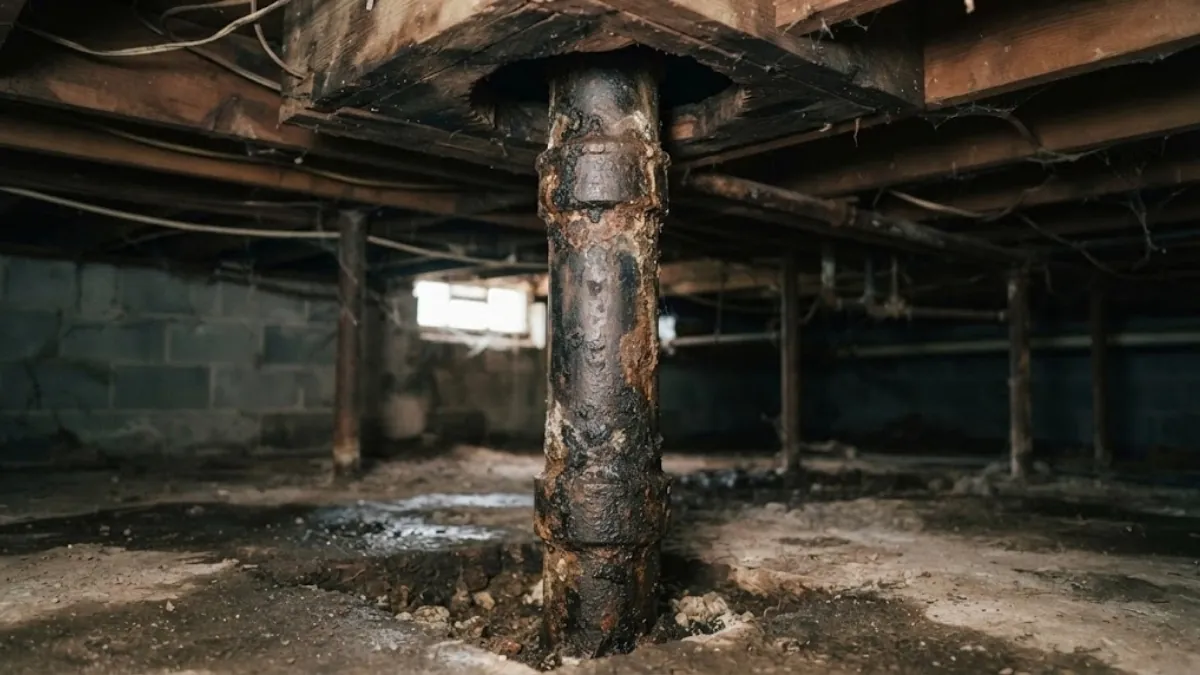
It does not last forever. Inside the pipe, rust and scale build up and narrow the bore. Along the bottom of horizontal runs, the wall thins until cracks open. The first sign is often a slow drain that keeps returning, a rust-colored stain on a basement wall, or a faint sewer smell with no obvious source.
When an older Roswell house reaches that point, the owner usually faces a choice: replace the failing sections, line them, or replace the whole system. This article explains how to decide.
What to Look For Before Calling
These signs point to cast iron that is failing rather than just clogged.
- Rust-colored stains or weeping on the outside of pipes in the basement or crawl space.
- A sewer smell near a wall or floor with no fixture nearby.
- Repeat clogs in the same branch within a few months.
- Visible cracks or bulges especially along the bottom of horizontal runs.
- Flakes of rust or scale on a drain cable after a clearing.
Any of these justify a camera inspection before choosing a fix.
Options
Section Repair, Lining or Full Replacement
The right choice depends on how much of the system is affected and how easy it is to reach.
| Option | Best when | What it involves | Trade-offs |
|---|---|---|---|
| Replace failed sections | Damage is limited to one or two runs | Cut out bad pipe, join new PVC with shielded couplings | Cheapest, but other old sections remain |
| Line the pipe | Pipe is cracked or scaled but still round | Descale, then install a liner or coating inside | Little wall opening, slightly smaller bore |
| Full replacement | Most of the system is failing | Replace stacks and horizontals with PVC | Most disruption, longest-lasting result |
Lining interior stacks requires thorough descaling first, since scale left in place keeps a liner from bonding. The trenchless pipe lining page covers how liners are installed and verified.
Working Around Plaster and Old Framing
Historic homes add practical constraints. Plaster and lath walls are harder to open and patch than drywall, and stacks are often buried in thick walls or chases that were never designed for access. That makes approaches that minimize wall openings more attractive, even when they cost more per foot.
Old framing can also hide surprises: previous repairs in mixed materials, abandoned lines, or joists notched long ago to fit a pipe. A good plan maps the existing system before quoting, which is why a camera inspection of the drains is the first step in older houses.
Supply lines in these homes are often old galvanized steel. If the walls are being opened for drains anyway, it can make sense to deal with the supply at the same time.
Permits
Permits and Code on Older Homes
The City of Roswell requires a permit before anyone alters or replaces a plumbing system, and that includes drain replacement in historic houses. New work has to meet Georgia's state minimum plumbing code, which is adapted from the IPC. That can mean adding cleanouts where the old system had none, correcting slope on horizontal runs, or updating vents.
These upgrades are not busywork. A cleanout at the base of the stack turns a messy future clearing into a quick one, and correct slope is what keeps new pipe from clogging the way the old pipe did.
Older homes in nearby Sandy Springs face similar cast iron decisions, though their permits run through their own city.
Budgeting
What Drives the Cost in an Older Roswell House
Cast iron work in historic homes is priced less by the foot of pipe and more by access. A stack inside a plaster wall between two finished rooms is a very different job from a stack exposed in an unfinished basement. Expect quotes to vary with how many walls and ceilings must be opened and restored, whether the work is on one floor or several, and whether horizontal runs are reachable from a crawl space or basement below.
Scope is the next variable. Replacing one failed horizontal run is modest. Replacing the main stack and every branch is a larger project that may take several days and involve other trades for plaster and finish work. Lining sits between the two, with less demolition but careful preparation.
Ask each contractor to price the same scope, list which walls they expect to open, and say whether restoration is included. That makes quotes comparable.
Before You Sign
Questions to Ask About a Cast Iron Quote
Ask whether the camera footage shows the stack as well as the horizontal runs, because a stack that looks fine from the basement can be scaled shut two floors up. Ask how branch connections will be reopened if the plan is to line the pipe, and how the contractor confirms each one is fully open afterward.
If replacement is proposed, ask where the new pipe will tie into the old, since a transition from cast iron to plastic needs the right coupling and support. Finally, ask about the permit. In Roswell, altering a plumbing system requires a City permit and inspection, and the paperwork is worth keeping for a future sale of a historic home.
Cost
What Drives the Price of Cast Iron Work
The repair method is only part of the number. Access and finishes decide the rest.
Insurance rarely pays for cast iron that wore out with age, though it may cover sudden water damage a failure causes. Ask for a written scope that separates the pipe work from wall and floor repair so you can compare quotes line by line. Do not let anyone open walls before the camera footage shows where the damage is.
Want a cast iron drain priced from real footage? Call (770) 214-4545.
Questions
Cast Iron Questions
Often many decades, sometimes more than 50 years, but life varies with water chemistry, use and how the pipe was installed. Horizontal sections tend to fail first because waste sits along the bottom of the pipe.
Yes. Shielded no-hub couplings join cast iron to PVC and are a standard way to replace a failed section without replacing the whole stack. The joint should be supported properly so the heavy cast iron above does not load the plastic.
Interior plumbing work generally goes through the City's building permit process. Changes to the exterior of a property in a historic district can involve additional review, so ask the City before any work that alters the outside of the house, such as a new vent location on a street-facing roof.
Sources for This Page
Roswell's founding and historic district references come from public reference data on Roswell, Georgia, and City of Roswell materials. Permit requirements come from the City of Roswell Community Development building FAQ. Code references are to the IPC as adapted in Georgia's state minimum plumbing code.
Written by the Roswell 24/7 Plumbing team and checked against the sources above. Last reviewed October 1, 2026.
Old Cast Iron Acting Up?
Start with a camera look and a plan that fits the walls you have.
Call (770) 214-4545