Separate Water Damage Line, 24/7
Emergency Water Damage Restoration in Roswell, GA
Extraction, structural drying, removal of soaked materials and rebuild after burst pipes, appliance leaks and sewer backups in Roswell homes. Calls on this page go to the water damage restoration line.
- Answered 24/7
- Moisture readings documented
- Insurance photos and notes
Water Damage, by Source
The water source affects both the cleanup and the insurance claim.
Water Damage Restoration
After the Pipe Is Fixed, the Water Is Still in the House
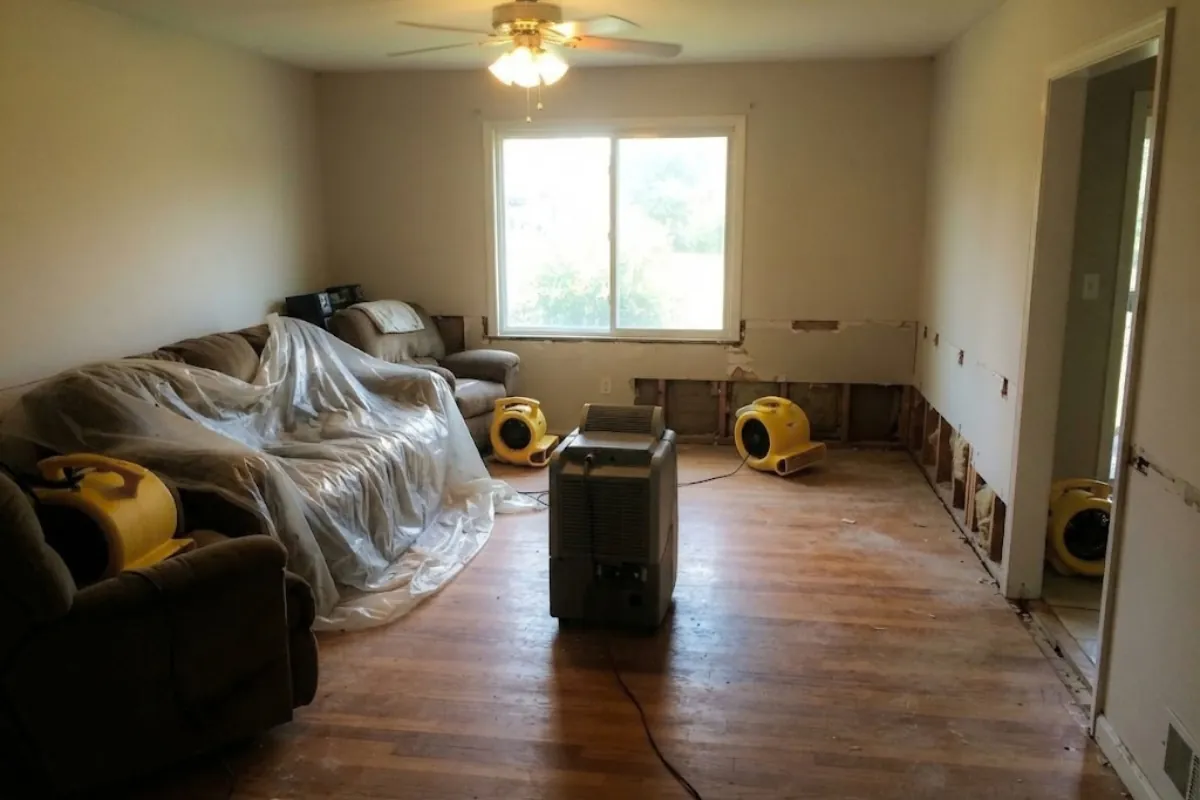
Water damage restoration is the work of returning a house to its pre-loss condition after water has soaked into it. That means extracting standing water, finding where moisture has traveled, drying the structure with commercial equipment, removing materials that cannot be saved, and rebuilding. It is separate from plumbing repair. The plumber stops the leak. Restoration deals with everything the leak touched.
In Roswell, the causes range from ordinary to historic. A burst supply line in an upstairs bath can soak two floors in an hour. During the December 2022 holiday freeze, Roswell fire crews logged more than 100 burst-pipe calls in a single day, according to Atlanta News First. In September 2009, the USGS measured a 100-year flood on the Chattahoochee at Roswell, and homes along Riverside Road took on water.
The number on this page connects you to the water damage restoration line for Roswell homes in 30075 and 30076, answered 24/7.
What to Do in the First Hour
These steps limit the damage and protect your insurance claim.
- Stop the water. Close the main shutoff. If the source is a plumbing failure, the burst pipe repair page covers the repair itself.
- Cut power to wet areas. If water is near outlets or the panel, stay out of the area and call your electric utility.
- Photograph everything. Take wide shots and close-ups of the water, the source and damaged belongings before moving anything.
- Move what you can. Lift furniture off wet carpet and move electronics, documents and rugs to a dry area.
- Call your insurer. Report the loss early and ask about their process and any documentation they need.
Do not use a household vacuum on standing water, and stay out of any water from a sewer backup.
Water Still Spreading?
Shut off the main, then call the water damage line. Extraction crews are dispatched around the clock.
Water Categories
Clean, Gray or Contaminated: Why the Source Matters
The industry classifies water by contamination level, which decides what can be dried and what has to go.
| Category | Typical Roswell source | What it means for cleanup |
|---|---|---|
| Category 1: clean | Burst supply line, water heater leak, overflowing sink | Most materials can be dried in place if work starts quickly |
| Category 2: gray | Washing machine or dishwasher overflow, toilet overflow without feces | Carpet pad and some porous materials are often removed |
| Category 3: contaminated | Sewer backup, creek or river flooding, long-standing water | Porous materials removed, stricter cleaning procedures |
Clean water does not stay clean. Water that sits for a day or two in a warm house can degrade toward a higher category, which is one more reason to start drying fast.
The Process
How Restoration Moves From Wet to Rebuilt
- 1
Inspect and map
Moisture meters and thermal cameras show where water traveled.
- 2
Extract
Remove standing water from floors, carpet and pad.
- 3
Dry and monitor
Air movers and dehumidifiers, with daily moisture readings.
- 4
Remove and rebuild
Replace materials that could not be saved.
The industry reference for this work is the IICRC S500 standard for professional water damage restoration. It covers how to assess water categories, set up drying equipment and verify that materials are actually dry. Ask any restoration provider how their process lines up with it and how they document moisture readings.
Cost
What Drives the Cost of Water Damage Restoration
Most restoration is billed by scope, and insurance adjusters review it line by line.
Insurance claims go more smoothly with documentation: photos, moisture readings, equipment logs and a clear description of the cause. Keep the plumber's invoice showing what failed. Homes in nearby Dunwoody go through the same process after freeze and storm damage.
Water in the house now? Call (833) 521-1033.
Questions
Water Damage Questions From Roswell
Because fixing a pipe and drying out a house are two separate jobs. A plumber fixes the pipe that failed. Restoration handles what the water did afterward: extraction, drying, removing ruined materials and rebuilding. Calls on this page's number go to the restoration line so the right crew and equipment are sent.
As soon as possible. Water keeps wicking into drywall, flooring and framing for hours, and Georgia's warm, humid conditions slow natural drying. Starting extraction and drying within the first day or two limits how much material has to be removed.
Sudden, accidental water damage, such as a burst pipe or failed supply line, is commonly covered. Gradual leaks, flooding from surface water and sewer backups are often excluded unless you have specific coverage, such as a flood policy or a water backup endorsement. Most policies also expect you to take reasonable steps to prevent further damage, which is what prompt drying does.
Small, clean spills caught right away, sometimes. Anything that soaked into walls, under flooring, into insulation or through a ceiling usually needs moisture meters to find where the water went and commercial dehumidifiers to dry it. Wet materials that look dry on the surface can stay wet inside for days.
Yes. Water from a sewer backup is treated as contaminated. Porous materials it touched, such as carpet pad and the bottom of drywall, are generally removed rather than dried, and cleanup follows stricter procedures. The sewer line repair page covers fixing the cause.
The restoration line handles drying and removal of water-damaged materials. Mold testing and health questions are separate, and anyone with health concerns should talk to a physician. The honest priority is getting the structure dry fast, since mold needs sustained moisture to take hold.
Sources for This Page
December 2022 burst-pipe call volume comes from Atlanta News First's holiday freeze coverage. September 2009 flood data come from the USGS South Atlantic Water Science Center. Water categories and the drying process reference the IICRC S500 Standard for Professional Water Damage Restoration.
Written by the Roswell 24/7 Plumbing team and checked against the sources above. Last reviewed October 1, 2026.
Water in Your Home Right Now?
The water damage restoration line is answered 24/7 for Roswell homes.
Call (833) 521-1033