Roswell Plumbing Blog
Pipe Lining vs. Digging Under Mature Oaks in Horseshoe Bend and Martin's Landing
Root-choked lateral under a mature oak? How lining and trenching compare on Roswell's wooded lots, and how camera footage decides which one fits.
The Dilemma
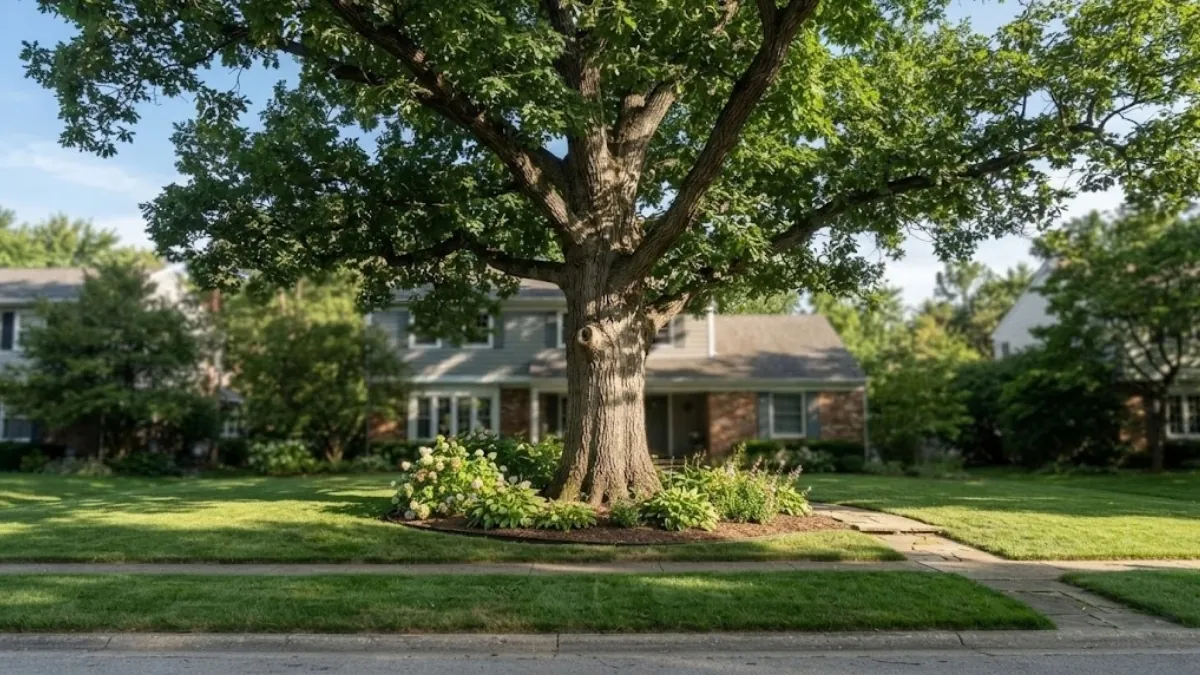
Your Sewer Line Runs Under a 40-Year-Old Oak
In neighborhoods like Horseshoe Bend, Martin's Landing and Woodfield, the sewer lateral usually runs from the house to the street under the same trees that make the lot worth living on. Those trees were saplings or preserved woods when the subdivisions went in during the 1970s and 1980s. After 40 or 50 years, their roots have found every open joint in the old clay or cast iron pipe.
When the line starts backing up, homeowners get two very different proposals. One is to dig a trench and replace the pipe. The other is to line the existing pipe from the inside without digging. Both can be right. The deciding factors are the condition of the pipe and what a trench would do to the tree and the yard.
This article compares the two for a typical Roswell lot, and explains when each one makes sense.
Why a Trench and a Mature Tree Do Not Mix
Most of a tree's roots sit in the top foot or two of soil and spread well past the edge of the canopy, which is exactly where a sewer lateral usually runs. Arborists commonly describe a critical root zone around the trunk, often estimated at about one foot of radius for every inch of trunk diameter. A trench cut through that zone severs the roots that anchor and feed the tree.
The damage is often not immediate. A tree can look fine for a season or two after trenching, then decline. On a sloped Roswell lot, losing a large oak can also change drainage and stability.
Red clay adds a second problem. Backfilled clay settles slowly and unevenly, so a trench can keep sinking for months and leave a visible stripe or low spot across the lawn.
Compare
Lining Versus Digging on a Tree-Heavy Lot
How the two approaches compare for a typical 60 to 100 foot Roswell lateral.
| Factor | Cured-in-place lining | Open trench replacement |
|---|---|---|
| Effect on tree roots | Minimal, work is inside the pipe | Severs roots along the route |
| Digging | Usually none, or one small access pit | Full length of the lateral |
| Fixes root entry at joints | Yes, the liner has no joints | Yes, with new pipe |
| Fixes a sag or collapsed section | No | Yes |
| Surface restoration | Little to none | Lawn, beds, sometimes driveway |
| Settling afterward | None | Clay backfill can settle for months |
The Deciding Factor
When the Camera Says Lining Will Work
A liner is a new pipe formed inside the old one, so the old pipe has to be intact enough to serve as a mold. Cracks, open joints and root entry along a line that is still round and running downhill are ideal. A collapsed section, a belly that holds water or badly deformed pipe are not, because the liner will follow the defect.
That is why the decision starts with a camera. The footage shows how many joints are affected, whether any section has dropped, and exactly where each problem sits. It also shows the pipe material, which matters for how the line is cleaned before lining.
Lining work is covered by published installation standards, notably ASTM F1216 for inverted liners and ASTM F1743 for pulled-in-place liners. Ask which method a contractor uses and whether you get before and after footage. Our trenchless pipe lining page explains the process in detail.
Mixed Answers
When the Answer Is Both
Plenty of Roswell laterals end up with a combination. A lateral might have root entry at eight joints but one short sag near the street. The practical fix is often a small excavation at the sag, placed away from the trunk, with lining for the rest of the run.
If most of the line has failed, full sewer line replacement may still be the right call. Pipe bursting, which pulls new pipe through the old path from a pit at each end, avoids a long trench and can be routed to keep the pits outside the critical root zone.
The same thinking applies across the Chattahoochee in East Cobb, where subdivisions from the same era sit under similar tree cover, though the sewer there belongs to Cobb County.
What to Do Before Choosing Between Lining and Digging
Ask for these before signing anything.
- Camera footage with distances. Every defect marked by its distance from the access point.
- Pipe material and diameter. Clay, cast iron, Orangeburg or PVC, and 4-inch or 6-inch.
- Where each tree sits. Mark large trunks relative to the lateral route.
- Both prices. A lining quote and a dig or burst quote, each including surface restoration.
- What the liner will not cover. The start and end points, and any sag that still needs digging.
Georgia 811 must mark buried utilities before any excavation, including a small access pit.
Afterward
Restoring the Yard After Either Method
Ask how the surface will be restored before work starts. With lining, restoration is usually limited to an access point. With a trench or pits, expect backfill in layers, a plan for settling in red clay, and replacement of sod, beds or hardscape. Get that plan in writing along with the price.
Before the Decision
What to Ask for Before Choosing Lining or Digging
Ask for the camera footage with every defect marked by distance from the cleanout, the pipe material and the depth reading at the problem spots. Ask whether the line has any sags that hold water, because lining will not fix slope. And ask for both options priced if both are realistic, including surface restoration for the dig.
With those answers side by side, the choice usually becomes clear. A round pipe with roots at many joints under a mature tree points to lining. A collapsed or sagging section points to digging that spot, and our sewer line repair page covers that path.
Questions
Lining and Tree Questions
Lining itself does not disturb the root zone, because the work happens inside the existing pipe. The roots already inside the pipe are cut out during cleaning, which the tree tolerates far better than a trench through its structural roots.
Not through the lined section. Roots enter pipes at joints and cracks, and a cured liner has neither. Ask where the liner starts and stops, since any unlined joint, including the connection at the main, is still open to roots.
Yes, when the pipe has collapsed or sags. A liner needs an intact, properly sloped host pipe. In those cases, a short, carefully placed excavation or a pipe-bursting pit away from the trunk is usually better than a long trench.
Sources for This Page
Neighborhood tree and lateral patterns come from published Roswell service-area notes by local plumbing contractors. Critical root zone guidance reflects common arborist practice. Liner methods reference ASTM F1216 and ASTM F1743. The 811 requirement comes from Georgia's utility locate law.
Written by the Roswell 24/7 Plumbing team and checked against the sources above. Last reviewed October 1, 2026.
Roots Back in the Sewer Line?
Start with camera footage and get a straight answer on lining versus digging.
Call (770) 214-4545