Roswell Plumbing Blog
Roswell Water Utility or Fulton County: Who to Call for a Leak at Your Meter
Roswell has two water providers and one rule about the meter. How to find out who serves you, test which side is leaking and call the right party.
The Short Answer
Two Water Systems Inside One City
If water is bubbling up near your meter box in Roswell, the first call depends on which side of the meter the leak is on, and that depends on who supplies your water. Roswell is unusual here. The city runs its own water system, but it covers only part of Roswell. According to the City's 2024 water quality report, the Roswell Water Utility serves roughly 18,500 residents, and the remaining 80 percent or so of the city gets its water from Fulton County.
Both systems follow the same basic rule. The utility owns the meter and the pipe running from it out to the water main. You own the buried service line from the meter to your house and everything inside. Fulton County spells this out in its service lateral flyer, and it is the rule plumbers work from across Roswell.
So the practical steps are simple: find out which provider serves you, work out which side of the meter is leaking, and call the right party. This article walks through each step.
Compare
Roswell Water Utility and Fulton County at a Glance
Your bill names your provider. Here is how the two compare.
| Roswell Water Utility | Fulton County Water | |
|---|---|---|
| Who it serves | About 18,500 Roswell residents, mostly in and around downtown, plus Mountain Park | Most of Roswell, and also Alpharetta, Johns Creek and Milton |
| Main source | Big Creek, plus a groundwater well | Chattahoochee River |
| Treatment | Roswell's own plant, rated at 3.3 million gallons a day, with supplemental water available from Fulton | Tom Lowe Atlanta-Fulton County plant in Johns Creek |
| Reporting a leak | 770-641-3707 weekdays, 770-640-4100 after hours | 770-640-3040 for drinking water emergencies north of the river |
| Sewer | Fulton County | Fulton County |
Numbers change, so confirm them on your bill or the provider's website and save them in your phone before you need them.
What to Do Before You Call Anyone: Find the Leaking Side
Ten minutes with the meter usually settles it.
- Turn off every water use in the house. Faucets, washer, dishwasher, ice maker and irrigation.
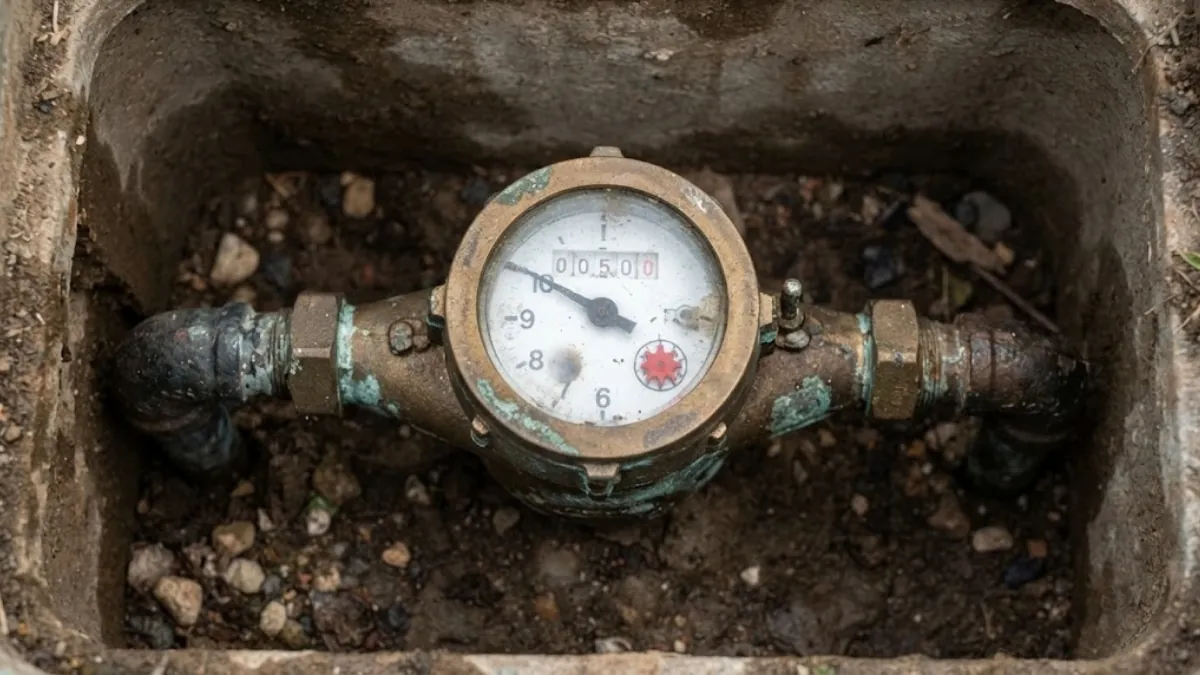
- Look at the meter's leak indicator. Most meters have a small triangle, star or dial that spins with even a tiny flow.
- Close the house main and look again. If the indicator stops, the leak is inside the house or between the main shutoff and the fixtures.
- If it keeps moving with the house main closed, water is escaping between the meter and the house, which is your service line.
- If water is pooling at the meter box itself, especially on the street side, report it to the utility. Do not open the box or operate its valve.
Take a photo of the meter reading at each step. It helps the plumber and it helps any conversation about your bill later.
Utility Side
What Happens When the Leak Is the Utility's
If the water is coming from the meter, the meter box or the ground between the meter and the street, report it to your provider and let them repair it. That work is theirs by rule, and in most cases you should not pay a plumber to touch it. Fulton County's flyer is explicit that leaks between the meter and the main are the County's responsibility.
Utility repairs are scheduled by the utility, so a slow seep may wait a few days while a gushing break is usually handled quickly. If the leak is soaking your yard or threatening a basement, say so when you report it. Photos help.
A utility-side repair can also affect your house afterward. When crews shut down and restore a main, pressure swings and sediment can reach indoor fixtures. Running cold water for a few minutes and cleaning faucet aerators usually clears it.
Your Side
What Happens When the Leak Is Yours
If the meter test points to your service line, the repair is yours to arrange. Most Roswell service lines are buried a foot or two deep and run from the meter near the street to the point where the line enters the house. Older lines may be galvanized steel or polybutylene, both of which fail with age. Newer ones are usually copper or plastic.
The job starts by pinpointing the leak with acoustic equipment so only a small section of yard is opened. A single failure on otherwise good pipe is a spot repair. A line that has leaked before, or is made of a failure-prone material, is usually replaced end to end, sometimes by pulling new pipe through with little digging. Our water line repair and replacement page covers the options, and if the meter test suggests the leak is inside the house instead, hidden leak detection is the next step.
The same rules apply in Fulton County water cities next door. In Johns Creek, where Fulton's Tom Lowe treatment plant is located, the meter is the dividing line exactly as it is in Roswell.
A Few Habits Worth Building
Know where your meter box is and keep it clear of mulch and shrubs so the utility can reach it. Know where the house main is and make sure it turns. Write both providers' after-hours numbers on a label near the main shutoff.
And check the meter's leak indicator once or twice a year with everything off. A slow service line leak can run for months before it shows up as a soggy patch, and the bill is often the first clue.
Questions
Meter Leak Questions
No. The meter, its valve and the box belong to the water provider. Use the house main shutoff instead, usually where the line enters the basement, crawl space or garage. If that valve will not close, call the provider's after-hours line.
The water passes through your meter, so it is billed to you. Some providers review high bills after a repair, so keep the plumber's invoice showing what failed and when it was fixed, and ask your provider what adjustments, if any, apply.
Check the first bill, the closing documents or the utility transfer instructions from the seller. Homes in and around downtown Roswell are more likely to be on the Roswell Water Utility. Most of the rest of the city is on Fulton County.
Sources for This Page
Provider coverage and water sources come from the City of Roswell's 2024 Annual Water Quality and Consumer Confidence Report and its water utility pages. Fulton County coverage, treatment plant and emergency contacts come from Fulton County Public Works' water quality reports and emergency repairs page. Meter-side responsibility comes from Fulton County's water and sewer service lateral flyer.
Written by the Roswell 24/7 Plumbing team and checked against the sources above. Last reviewed October 1, 2026.
Meter Test Says the Leak Is Yours?
Call and we will pinpoint it and fix it with as little digging as possible.
Call (770) 214-4545