Roswell Plumbing Blog
Why to Scope the Sewer Line Before Buying a Roswell Home
Most home inspections skip the buried sewer line. Why Roswell buyers should order a scope, what to look for by house age, and how to use the video.
Before Closing
The Pipe Your Home Inspection Probably Skipped
Buyers in Roswell pay for a home inspection, read the report closely and negotiate over roof age, HVAC and water heaters. Then, months later, some of them discover a collapsed sewer lateral under the front yard. The inspection did not miss it through carelessness. The buried sewer line is usually outside the scope of a standard home inspection.
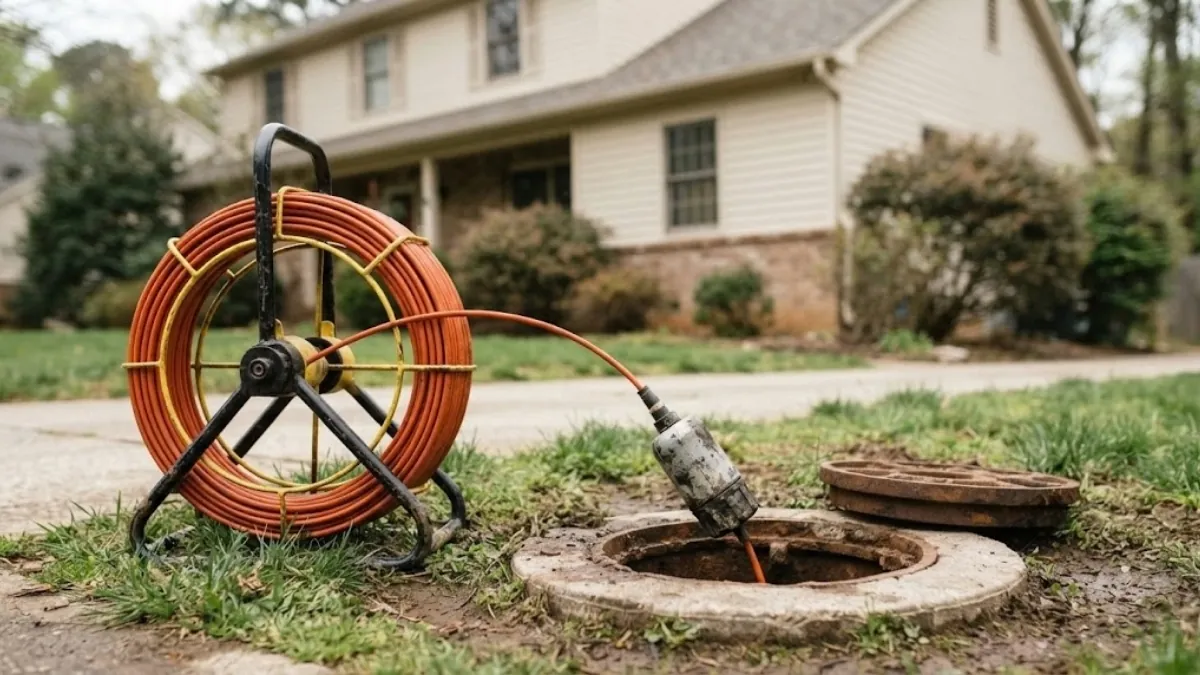
A sewer scope, a short camera inspection of the line from the house toward the street, closes that gap. In a city where so many homes are 40 to 60 years old, it is one of the most useful and least expensive checks a buyer can order.
Why It Matters More in Roswell
Two things make sewer scopes especially relevant here. First, the housing stock is old enough for original laterals to be failing. Historic homes near Canton Street may have clay or cast iron. Subdivisions from the 1970s and 1980s, like Horseshoe Bend and Brookfield Country Club, often have laterals under mature trees that have been sending roots into joints for decades.
Second, repairs are expensive and fall on the owner. Under Fulton County's service lateral rules, the owner is responsible for the lateral all the way to the main, even under the street. Once you close, that responsibility is yours.
By Era
What to Look For, by the Age of the House
The build year tells you where to focus the camera and the questions.
| Built | Likely lateral material | Main risks | Questions for the seller |
|---|---|---|---|
| Before about 1950 | Clay or cast iron | Cracks, scale, root entry | Any past repairs or lining? |
| 1950s to early 1970s | Clay, cast iron or Orangeburg | Orangeburg deformation, root entry | Has the lateral ever been replaced? |
| 1970s to 1990s | Clay, cast iron or PVC | Roots at joints under mature trees | How often has the main been cleared? |
| Late 1990s onward | PVC | Usually minor, sometimes sags | Any backups since construction? |
What to Do Before the Scope Appointment
A little preparation makes the inspection faster and more useful.
- Ask where the cleanout is. Sellers or their agents often know. Without one, the camera may go through a toilet flange.
- Ask for maintenance history. Past clearing, root treatment or repair invoices tell you a lot.
- Plan for water use. Running water ahead of the camera helps the operator see the line.
- Ask for the video. You should get the footage and notes with distances to any defects.
- Book it early. Leave time for quotes before your due diligence period ends.
If the scope shows a problem, get the repair priced from the footage so the negotiation is based on real numbers.
Using the Results
Turning Footage Into a Negotiation
A clean line is good news and costs you little. A line with defects gives you options: ask the seller to repair before closing, negotiate a price reduction or credit, or walk away if the problem is severe and the timeline too short.
Whatever you choose, base it on a written quote tied to the footage. A sewer camera inspection report with distances lets any contractor price the work, and our sewer line repair page explains the difference between a spot repair, a liner and full replacement so you can judge whether a quote fits the problem.
Buying in Milton instead? Many homes there are on septic, so the scope stops at the tank, and a separate septic inspection covers the rest.
Reading the Report
How to Read a Sewer Scope Report
A useful report lists each finding with its distance from the access point, a short description and a still image or timestamp in the video. Distances matter because they tell a contractor whether a defect is under the lawn, the driveway or the street, which drives the repair price.
Minor findings, such as light scale or a small offset joint that is not catching debris, are common in older lines and may need nothing more than monitoring. Root entry at several joints, a section holding standing water, a crack with missing pipe wall or a deformed pipe are the findings that usually justify a repair quote before closing.
If the report is unclear, ask the inspector to walk you through the video. Seeing the pipe is often more useful than any written summary.
Costs
What Common Findings Tend to Cost to Fix
Costs vary widely, but the pattern is predictable. Cleaning and monitoring cost the least. A single spot repair or short point liner is moderate. Full-length lining costs more, and full replacement, especially under a driveway or into the street right-of-way, costs the most. Under Fulton County's rules, work in the right-of-way also involves County fees and coordination.
Get a written quote tied to the footage and share it with your agent. A number grounded in the actual pipe is far more persuasive in a negotiation than a general worry about an old sewer line.
Using the Results
What to Do With a Bad Sewer Scope
A scope that shows roots at a few joints or a single cracked section is a negotiating point, not a deal-breaker. Get a written repair estimate based on the footage, then ask the seller for a repair, a credit or a price adjustment within your contract's due diligence window.
A scope that shows a collapsed section, a long belly or deformed Orangeburg pipe is a bigger conversation, because full replacement costs more and the tie-in at the Fulton County main may need County and City approval. Share the video with the contractor pricing the work so the estimate reflects what the camera actually saw. Keep the footage either way, since it documents the line's condition on the day you bought the house.
Questions
Sewer Scope Questions
Usually not the buried part. Home inspectors look at visible plumbing, and professional standards of practice generally do not require inspecting underground piping. A sewer scope is a separate service you order.
During your due diligence period, early enough that you can get repair quotes and negotiate before the deadline. Scheduling it alongside the home inspection is common.
The camera can follow the building drain to the tank inlet, but the tank and drainfield need a septic inspection by a septic contractor. In areas with many septic homes, such as parts of Milton, plan for both.
Sources for This Page
Owner responsibility for laterals comes from Fulton County's water and sewer service lateral flyer. Housing-era patterns come from published Roswell service-area notes by local plumbing contractors. Milton septic information comes from the City of Milton's utilities pages.
Written by the Roswell 24/7 Plumbing team and checked against the sources above. Last reviewed October 1, 2026.
Under Contract on a Roswell Home?
Book a sewer scope before your due diligence period runs out.
Call (770) 214-4545