Smell Gas? Leave First, Then Call 911
Gas Line Installation & Repair in Roswell, GA
New gas lines for ranges, dryers, grills, fire pits, tankless heaters and generators, plus leak repairs and pressure testing on house piping, permitted and inspected in Roswell.
- Permitted and inspected
- Pressure tested before concealing
- CSST bonding checked
Gas Piping at a Glance
Gas smell is an emergency for 911 and the gas utility first.
What to Do If You Smell Gas
This comes first because it matters most. Natural gas has an odorant added so leaks smell like rotten eggs.
- Get everyone out. Leave the building now, pets included, and leave doors open behind you.
- Do not create a spark. No light switches, no phone calls inside, no lighters, no starting cars in an attached garage.
- Call from outside. Dial 911 or Atlanta Gas Light's emergency line once you are well away from the house.
- Do not go back in. Wait until the utility or fire department says it is safe.
- Then call for the repair. Once the gas is shut off and the source is found, the house piping repair is a plumbing job.
The gas utility's job is making the scene safe. Repairing the pipe on your side of the meter is ours.
Gas Line Installation & Repair
House Gas Piping in Roswell
Gas line installation and repair covers the natural gas piping from the outlet of your meter to every appliance in and around the house. That includes water heaters, furnaces, ranges, dryers, fireplaces, grills, fire pits and standby generators. Roswell 24/7 Plumbing installs, extends and repairs that piping across Roswell in 30075 and 30076.
In metro Atlanta, Atlanta Gas Light owns the gas mains and the meter. Your gas marketer sends the bill. Everything downstream of the meter belongs to the property owner, which is why repairing it, testing it and extending it for a new appliance falls to a licensed professional hired by you.
Georgia builds its gas rules on the International Fuel Gas Code, and the City of Roswell requires a permit for gas work, with an inspection that includes a pressure test before any new piping is hidden in walls or floors.
Projects
Common Gas Line Jobs and What They Involve
Sizing the line to the total load is the step that decides most of these.
| Project | What it takes | Watch for |
|---|---|---|
| Gas range or cooktop | Extend a line, add a shutoff and flexible connector | Clearance and connector length |
| Gas dryer | Line and shutoff in the laundry area | Dryer venting is separate and still required |
| Tankless water heater | Often a larger line from the meter | Meter capacity may need a utility check |
| Outdoor grill or fire pit | Buried or wall-run line with a shutoff | Protection and depth for buried runs |
| Standby generator | Dedicated line sized for full load | Longest runs and largest demand |
| Leak repair | Locate with detector and soap test, replace section | Pressure test after repair |
A tankless conversion is the most common reason an existing line turns out to be too small. The tankless page covers the other conversion checks, and water heater replacement covers standard tanks.
Need Gas Run to Something New?
Tell us the appliance and where it goes. Sizing starts with its BTU rating.
CSST, Bonding and Georgia Thunderstorms
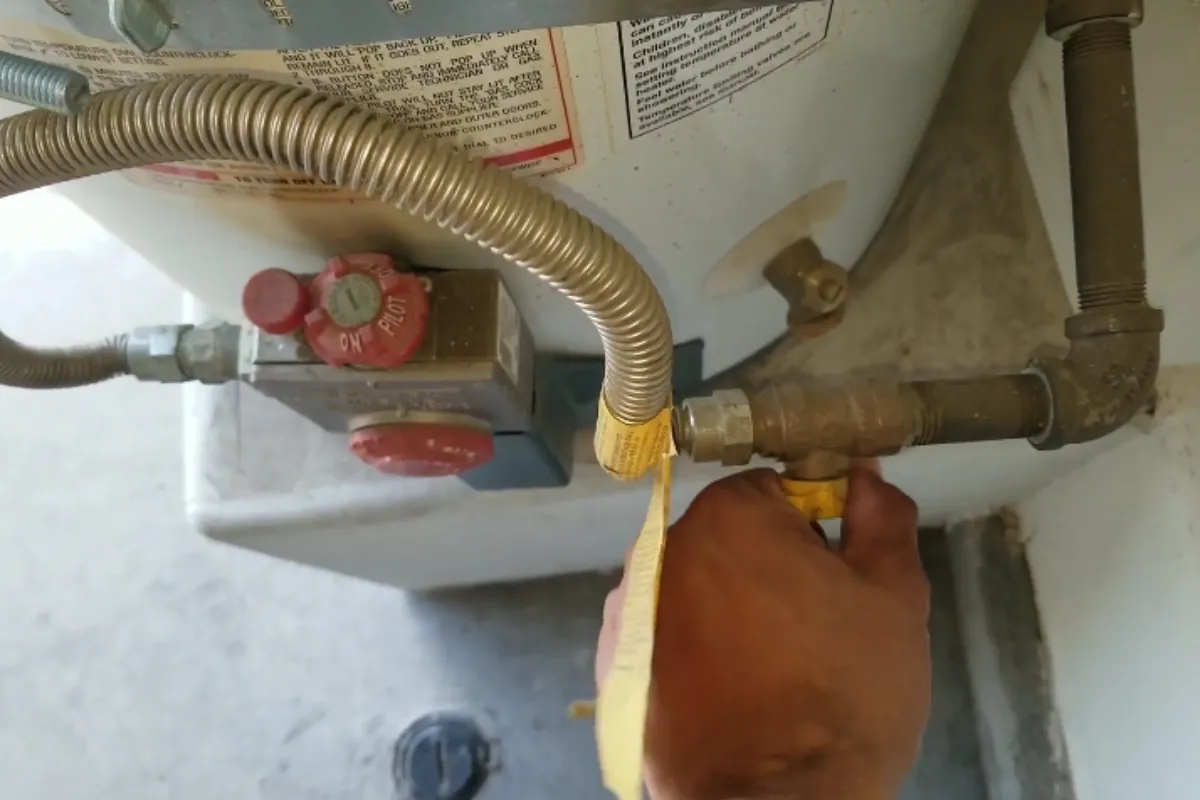
Many Roswell homes built or remodeled since the 1990s use corrugated stainless steel tubing, or CSST, for gas. It is flexible and quick to install, and it is a legitimate material. It also has a known weakness: a nearby lightning strike can arc through the thin wall and cause a leak or fire if the system is not bonded.
The International Fuel Gas Code requires CSST systems to be bonded to the home's electrical grounding electrode system. Older installations sometimes predate that requirement or were done without it. If your house has yellow- or black-jacketed flexible gas piping in the basement, crawl space or attic, it is worth confirming the bonding is in place.
Other code basics show up on every job: a sediment trap ahead of most appliances, an accessible shutoff valve at each one, and a pressure test before concealment.
Cost
What Drives the Cost of Gas Line Work
Distance and load decide most of the price.
Gas line work is quoted after the plumber knows the total appliance load and the route. New lines for grills, generators and water heaters are planned work with free estimates. Homes in nearby Johns Creek add a lot of outdoor gas for patios and generators, and the same permit process applies there through that city.
Planning a gas appliance? Call (770) 214-4545.
Questions
Gas Line Questions
Leave the building right away, leaving doors open behind you. Do not flip light switches, use phones inside, start a car in an attached garage or try to find the leak. From outside, call 911 or Atlanta Gas Light's emergency line. A plumber repairs the house piping after the gas utility has made the situation safe.
In metro Atlanta, Atlanta Gas Light owns and maintains the distribution system and the meter. The piping after the meter, running through your house to the appliances, belongs to the owner. Your gas marketer handles billing but not the pipes.
Yes. The City of Roswell requires a permit before anyone installs, alters, repairs or replaces a gas system, and the work is inspected, including a pressure test before piping is concealed.
CSST is corrugated stainless steel tubing, a flexible yellow- or black-jacketed gas pipe used in many newer homes. The International Fuel Gas Code requires CSST systems to be bonded to the electrical grounding system, because a nearby lightning strike can damage unbonded tubing. Georgia sees plenty of thunderstorms, so the bonding is worth confirming on any house that has it.
Yes. Outdoor gas lines are a common request in Roswell. They need correct sizing for the appliance, protection where they run underground or along walls, and a shutoff near the appliance. Standby generators need a line large enough to feed them at full load.
Every gas appliance has a BTU rating, and the line and meter have to supply the total of everything that might run at once. Adding a tankless water heater, generator or large range is the most common reason a line needs upsizing.
Sources for This Page
Permit requirements for gas systems come from the City of Roswell Community Development building FAQ. CSST bonding, sediment trap and pressure test requirements reference the International Fuel Gas Code, which Georgia adopts as its state minimum gas code. Utility roles reflect Georgia's natural gas structure, with Atlanta Gas Light as the distribution utility in metro Atlanta.
Written by the Roswell 24/7 Plumbing team and checked against the sources above. Last reviewed October 1, 2026.
New Gas Appliance or a Line to Repair?
Get it sized, permitted and pressure tested. If you smell gas, leave and call 911 first.
Call (770) 214-4545