Polybutylene & Galvanized Replacement
Whole-House Repiping & Pipe Replacement in Roswell, GA
Failing polybutylene and corroded galvanized supply lines replaced with PEX or copper on a planned schedule. The City permit and inspection are included, and you pick the date instead of the next leak.
- Free repipe estimates
- PEX or copper options
- Permit and inspection included
Repipe Candidates in Roswell
Check the pipe at your water heater. It usually tells the story.
Sound Familiar?
A Stain Under the Bathroom, Rusty Hot Water or Pressure That Keeps Fading
People rarely start out searching for a repipe. They start with a water stain spreading across the ceiling below an upstairs bath, a second leak in a year, brown water in the tub when the hot tap first opens, or a shower that has slowly lost its pressure. Each of those can be a one-off. Together, or in an older house, they usually point to a supply system that is wearing out everywhere at once.
Repiping means replacing the water supply lines throughout the house, from where the service line enters to every fixture, with new pipe. It does not touch the drains or the sewer. Roswell 24/7 Plumbing plans and completes repipes across Roswell in 30075 and 30076 and in nearby Sandy Springs, with free estimates because this is planned work, not an emergency.
The goal is to choose the date yourself instead of letting a burst fitting choose it.
By Era
Which Roswell Houses Usually Need It, and Why
The age of the house predicts the pipe material, and the material predicts how it fails.
| House era | Typical supply pipe | How it fails | Signs to look for |
|---|---|---|---|
| Before the late 1970s, including the historic district near Canton Street | Galvanized steel | Rusts from the inside, narrowing the bore | Rusty hot water, weak pressure, leaks at threads |
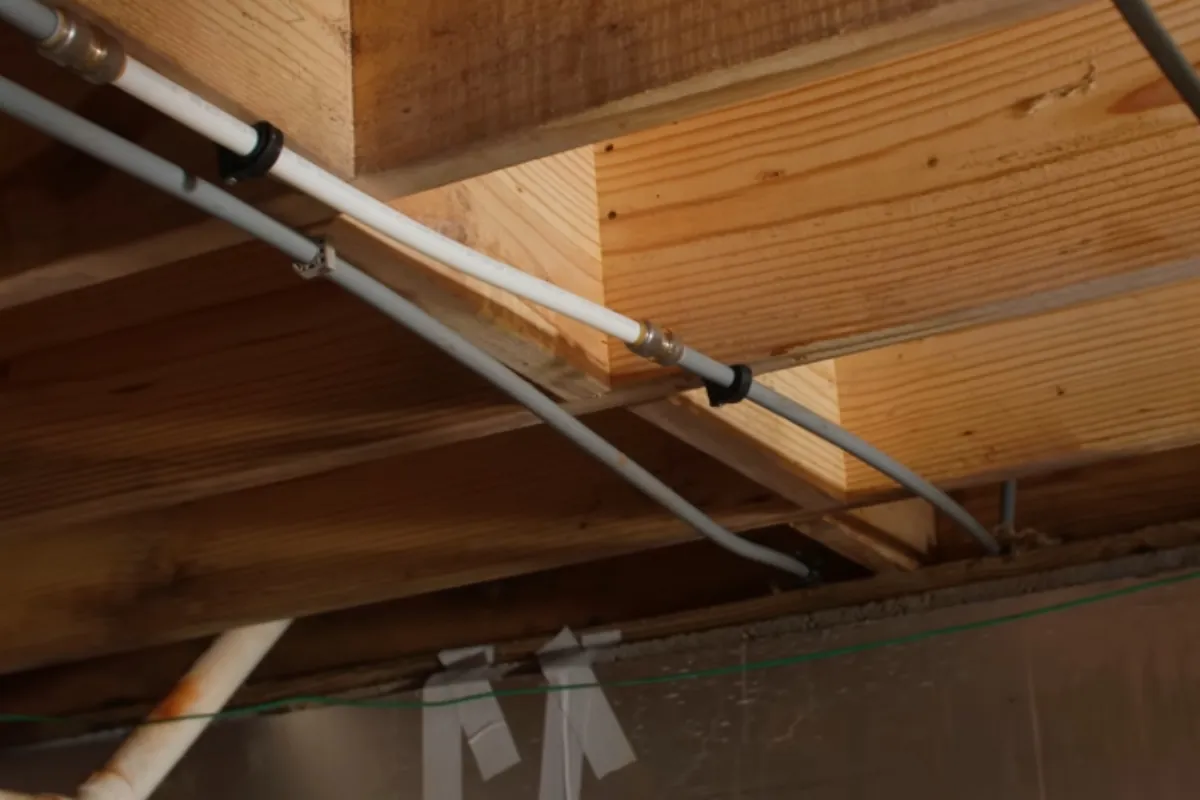
| About 1978 to 1995, including Horseshoe Bend, Martin's Landing and Brookfield Country Club | Polybutylene, often stamped PB2110 | Becomes brittle and cracks, often at fittings, with little warning | Gray plastic pipe, crimp rings, ceiling stains |
| Late 1990s onward | Copper, CPVC or PEX | Usually sound. Repairs are case by case | Isolated leaks, not a pattern |
If a leak has already happened, finding the leak precisely comes first. If the stain is a burst, the burst pipe repair page covers stopping it tonight, and the repipe can be planned after.
Found Gray Plastic Pipe at the Water Heater?
Describe what you found on the phone and get a straight read on whether a repipe is due.
Materials
PEX, Copper or CPVC for the New Lines
PEX
Flexible tubing with few hidden fittings, tolerant of freezing, and usually the lowest installed cost. The common choice for fished runs inside finished walls.
Copper
Rigid, long-lived and familiar. Needs more fittings and more wall access, and costs more in materials and labor.
CPVC
Rigid plastic used in some Georgia homes. Less common for full repipes today because it becomes brittle with age and heat.
Mixed systems
Copper at the water heater and exposed runs with PEX through walls is a common, sensible combination.
Whatever material goes in, Georgia's state minimum plumbing code, adapted from the IPC, sets the support spacing, sizing and fitting rules, and the City inspection checks them.
The Project
What a Repipe Looks Like Week to Week
- 1
Assess and quote
Map the fixtures and routes, free estimate, permit filed.
- 2
Run new lines
Section by section, with water restored each evening.
- 3
Connect and test
Tie in fixtures and water heater, pressure test the system.
- 4
Inspect and patch
City inspection, then drywall openings closed.
Many Roswell homes sit over crawl spaces or unfinished basements, so much of the new run can go underneath with only small openings upstairs. Old lines are usually abandoned in place rather than torn out of the walls.
What to Do Before the Repipe Starts
A little preparation shortens the job and protects the house while the old pipe is still in service.
- Find and test the main shutoff. Old polybutylene can fail any day until it is replaced. Make sure everyone in the house can close the main quickly.
- Check your insurer's position. Some insurers ask about polybutylene. Knowing their requirements now tells you what paperwork to keep afterward.
- Photograph existing stains. Pictures of old ceiling or cabinet stains separate prior damage from anything new.
- Clear access points. Empty sink cabinets, clear a path to the crawl space or basement, and move furniture from walls near bathrooms.
- Plan around water-off hours. Water is usually off during the workday and back on each evening. Plan laundry and showers around it.
If a fitting fails before the repipe date, close the main and call. That repair is treated as an emergency.
Cost
What Drives the Cost of a Repipe
House size is only the start. Access and finishes matter as much.
Some insurers ask about polybutylene when writing or renewing a policy, and a documented repipe with a passed City inspection answers that question. Homeowners insurance does not pay for a planned repipe itself.
Want a repipe estimate? Call (770) 214-4545.
Questions
Repiping Questions From Roswell
Look where pipes are exposed: at the water heater, under sinks, beside the toilet and at the main shutoff. Polybutylene is flexible plastic, usually gray, sometimes blue on service lines, and often stamped PB2110. Houses built from about 1978 to 1995 are the ones to check. Plastic or copper crimp rings at the fittings are another clue.
Both are proven. PEX is flexible, needs fewer fittings inside walls, handles freezing better and usually costs less to install. Copper is rigid, long-lived and preferred by some owners for exposed runs. Most whole-home repipes in older houses use PEX for the hidden runs because it can be fished through walls with smaller openings.
Plan on two to four working days for a typical house, depending on house size, number of bathrooms and access. Water is usually back on each evening once the day's section is connected.
Some, yes. The new lines are fished through walls and ceilings through small openings near fixtures and along the route. Crawl space and basement homes, which are common on Roswell's sloped lots, need fewer openings because much of the run is exposed underneath. Ask whether drywall patching is included in the quote.
Yes. The City of Roswell requires a permit before anyone alters or replaces a plumbing system, and the work is inspected. Keep the final inspection paperwork, since buyers and insurers may ask for it.
You can, and for a single failure on otherwise sound pipe that is often reasonable. With polybutylene or badly corroded galvanized, spot repairs tend to become a series of repairs, and a planned repipe usually costs less than several emergency calls plus water damage.
Sources for This Page
Permit requirements come from the City of Roswell Community Development building FAQ. Polybutylene and galvanized patterns by neighborhood come from published Roswell service-area notes by established local plumbing contractors. Installation rules reference the IPC as adapted in Georgia's state minimum plumbing code.
Written by the Roswell 24/7 Plumbing team and checked against the sources above. Last reviewed October 1, 2026.
Tired of Chasing Leaks?
Get a free repipe estimate and pick the dates that work for your household.
Call (770) 214-4545