Storm-Ready Basements
Sump Pump Installation & Repair in Roswell, GA
New pumps, battery backups, float and check valve repairs, and discharge lines that actually move water away from Roswell basements on sloped, clay-heavy lots.
- Pumps sized to the pit and inflow
- Battery backup options
- Tested before we leave
Sump Pump Warning Signs
Test with a bucket of water before storm season.
Sound Familiar?
Water on the Basement Floor After Every Heavy Rain
That is the moment most Roswell homeowners start paying attention to the sump pump, usually because it stopped keeping up or stopped altogether. Walkout and partial basements are common on the city's sloped lots, and red clay soil drains slowly, so water collects around foundations after long storms.
Roswell knows what heavy rain can do. During the September 2009 floods, the USGS measured a 100-year flood on the Chattahoochee at Roswell, and Big Creek at Roswell crested above 15 feet on September 22. Most storms are nowhere near that, but they do not need to be. A single failed pump during an ordinary Georgia downpour is enough to soak a finished basement.
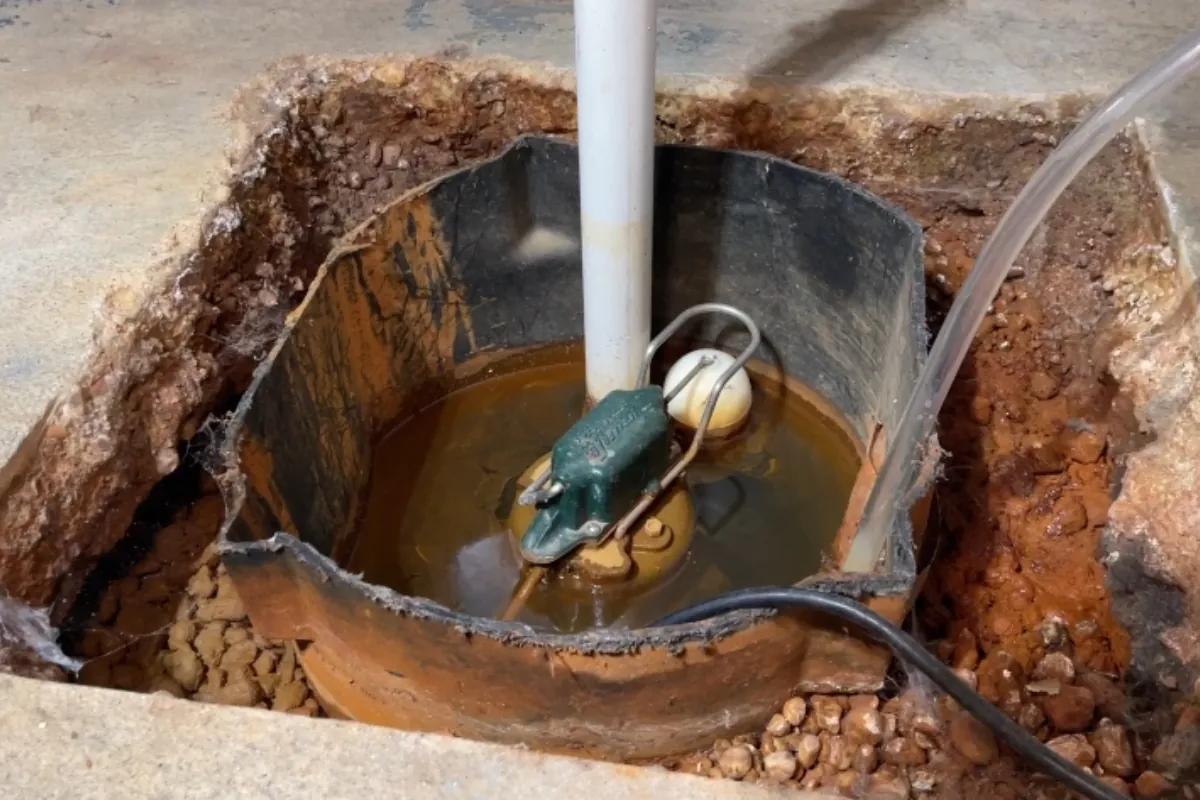
Sump pump installation and repair covers the pump, the pit, the float switch, the check valve, the discharge line and battery backup systems. Roswell 24/7 Plumbing handles them across Roswell in 30075 and 30076, including emergency calls during storms.
What to Do Before a Storm, and When the Pump Quits
A few checks now prevent most sump pump failures.
- Test the pump. Pour water into the pit until the float lifts. The pump should start, empty the pit and stop.
- Check the discharge. Walk outside during the test. Water should exit well away from the foundation.
- Clear the pit. Remove debris that can jam the float or clog the intake.
- Watch the check valve. Water rushing back into the pit after the pump stops means a failed check valve.
- If it quits in a storm. Unplug and replug it, check the breaker, and free the float. If it still does not run, call right away and move valuables off the basement floor.
A basement taking on water during a storm is an emergency and is answered 24/7.
Pump Dead During a Storm?
Call now. Storm-night sump failures are handled around the clock.
Options
Choosing the Right Pump Setup
The right system depends on how much water comes in and what is at stake.
| Setup | Best for | Trade-off |
|---|---|---|
| Submersible pump | Most finished basements | Quieter, sits in the pit, harder to reach |
| Pedestal pump | Narrow pits, occasional water | Easy to service, louder, less capacity |
| Battery backup pump | Any finished space at risk | Needs battery maintenance |
| Water-powered backup | Homes with reliable municipal pressure | Uses city water, no battery to maintain |
| High-water alarm | Every sump system | Warns before water reaches the floor |
A pump is only as good as its discharge. A line that dumps water next to the foundation on a sloped lot sends it straight back to the pit. Extending the discharge downhill and away from the house is often the cheapest improvement available.
Sump Pumps on Roswell's Sloped, Clay-Heavy Lots
Piedmont red clay holds water and drains slowly, so after days of rain the soil around a foundation stays saturated and water keeps finding the pit long after the storm ends. On sloped lots, the uphill side of the house takes the most pressure.
That is why pump sizing depends on inflow, not just the size of the basement. A pit that fills in minutes during a storm needs more capacity than one that barely collects water. A battery backup matters more here than in many places because summer thunderstorms and winter ice both knock out power.
Sump pumps should discharge outside to daylight or an approved drainage point, not into the sanitary sewer. The IPC, which Georgia's plumbing code is based on, prohibits draining storm water into sewers intended for sewage only. If basement water shows up during heavy rain along with gurgling drains, the problem may be a sewer backup rather than groundwater, and main line drain cleaning is the fix. Homes in nearby East Cobb with basements on sloped lots deal with the same patterns.
Cost
What Affects the Cost of Sump Pump Work
Most jobs are replacements. New pits cost more.
Insurance often excludes water damage from a failed sump pump unless a specific water backup endorsement was added. Check your policy before the next storm.
Pump failing or basement taking on water? Call (770) 214-4545.
Questions
Sump Pump Questions From Roswell
Slowly pour a bucket of water into the sump pit until the float rises. The pump should start, empty the pit and shut off. Check that water comes out at the discharge point outside. Do it before storm season and after any long dry spell.
A stuck float switch, a failed check valve letting water fall back into the pit, a pump too small for the inflow, or a high water table after days of rain. If it runs with no water coming in, the switch or check valve is the likely cause.
If losing the pump during a storm would flood finished space, yes. Heavy storms are exactly when power tends to go out. A battery backup pump sits beside the main pump and takes over when power fails or the main pump quits.
Outside and away from the foundation, typically to daylight on a slope or to an approved drainage point. In most jurisdictions it should not go into the sanitary sewer. Water dumped next to the foundation just cycles back into the pit.
Many last somewhere around 7 to 10 years, less if they run often. A pump that is getting louder, cycling more or older than a decade is worth replacing before a storm finds its weak point.
No. Water can also come from a leaking pipe, a water heater, a sewer backup through a floor drain or surface water entering at the walls. If the water appeared without rain, leak detection is the better first step.
Sources for This Page
September 2009 flood data for the Chattahoochee River and Big Creek at Roswell come from the USGS South Atlantic Water Science Center's record of that event. Soil behavior reflects Georgia Piedmont clay characteristics. Sump pump practices reflect common manufacturer installation guidance.
Written by the Roswell 24/7 Plumbing team and checked against the sources above. Last reviewed October 1, 2026.
Basement Taking On Water?
Storm calls are answered 24/7. Get the pump running and the water moving away from the house.
Call (770) 214-4545