No Hot Water? Answered 24/7
Emergency Water Heater Repair in Roswell, GA
Gas and electric tanks diagnosed and repaired day or night across Roswell, from a pilot that will not stay lit to a relief valve that will not stop dripping. If replacement makes more sense, you will hear why.
- Diagnosis before any part is swapped
- Gas and electric tanks
- Price approved first
Common Failures We Diagnose
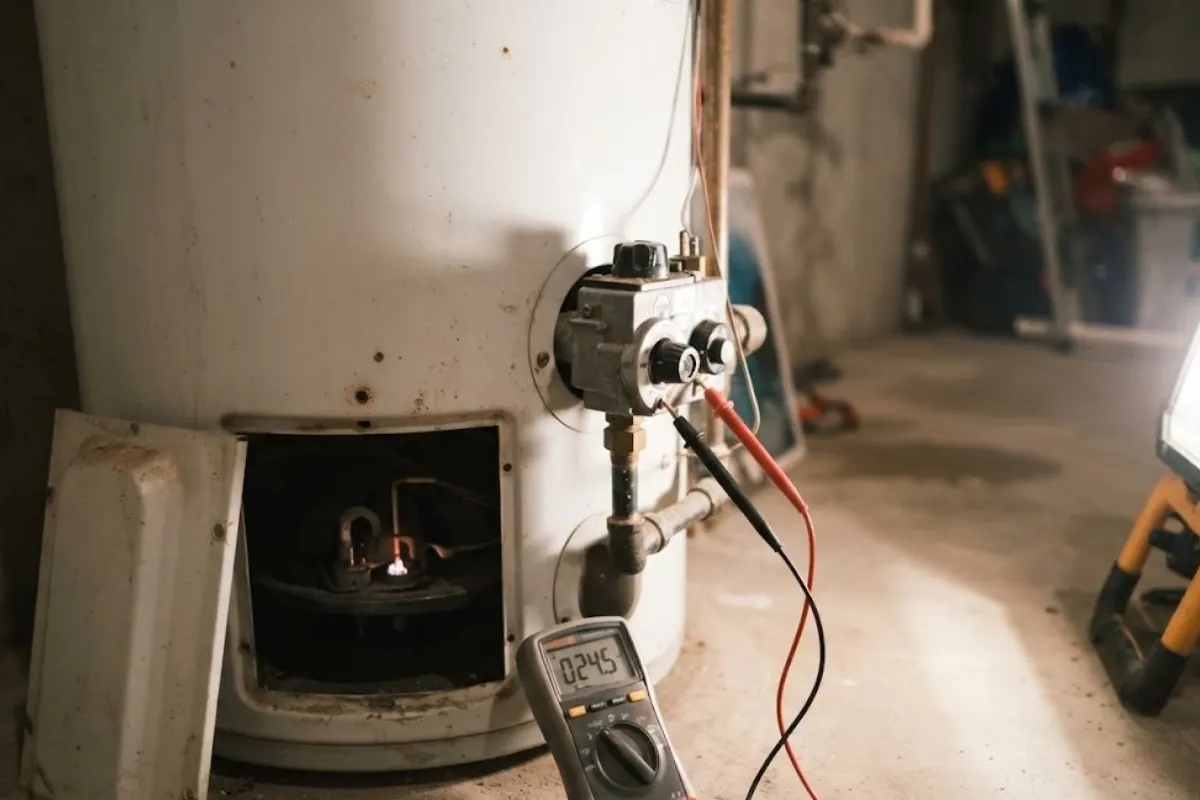
The symptom narrows the list before the plumber arrives.
Water Heater Repair
No Hot Water, or Water Where It Should Not Be
Water heater repair means finding and fixing the part that stopped your tank from heating safely. That might be a gas control, a burner component, an electric element, a thermostat or a leaking valve. Roswell 24/7 Plumbing repairs gas and electric water heaters across Roswell, GA, in 30075 and 30076, and treats any actively leaking tank as an emergency at any hour.
Most calls start one of two ways. Either the hot water is gone or lukewarm, or there is water on the floor around the tank. The first is inconvenient. The second can soak a finished basement or a garage full of stored boxes in a few hours, and a tank installed in an attic or a closet over living space can bring a ceiling down.
A good repair visit answers three questions: what failed, whether the tank is worth fixing, and whether anything around it, like the venting or the pressure in your water line, caused the failure.
Symptoms
What the Symptom Usually Points To
Match what you are seeing to the likely cause. It helps the plumber bring the right parts.
| What you notice | Gas tank, likely cause | Electric tank, likely cause | Repair or replace? |
|---|---|---|---|
| No hot water at all | Pilot out, thermocouple or gas valve | Tripped breaker, reset button, element | Usually repair |
| Hot water runs out fast | Sediment, burner issue, dip tube | Lower element failed | Usually repair |
| Water dripping from relief pipe | Worn T&P valve or high pressure | Same | Repair, and check pressure |
| Puddle around the base | Drain valve, fitting or tank | Drain valve, fitting or tank | Tank leak means replace |
| Rusty or smelly hot water | Depleted anode rod | Depleted anode rod | Anode swap if tank is sound |
A leak that turns out to be coming from somewhere else entirely, such as a supply line in the wall behind the tank, gets traced with our leak detection tools before anything is replaced.
Leaking Tank? What to Do Before Help Arrives
These steps limit the damage while you wait. Skip any you cannot do safely.
- Cut the heat source. On a gas tank, turn the gas control knob to Off. On an electric tank, switch off its breaker at the panel.
- Close the cold supply valve. It is on the cold pipe entering the top of the tank. Closing it stops the tank from refilling as it leaks.
- Keep clear of the relief pipe. Water from the temperature and pressure relief line can be scalding. Never cap or plug it.
- Move stored items away. Garages and basements around tanks are often full of boxes that wick water up fast.
- Note the label. Snap a photo of the rating plate with the brand, size and serial number. It speeds up any replacement quote.
Once the tank is off and the cold valve is closed, the leak slows to whatever is left in the tank. Tell the dispatcher which steps you managed.
Tank Leaking Right Now?
Shut off the gas or breaker and the cold valve, then call. Leaking tanks are handled around the clock.
Repair or Replace: An Honest Rule of Thumb
Standard tank water heaters commonly last somewhere around 8 to 12 years. Inside that window, most failures are parts, and parts are worth replacing. Near or past it, the math changes. A new gas valve on a 13-year-old tank buys time on a tank that may start leaking next year anyway.
Three findings make replacement the better call almost regardless of age: water seeping from the tank body, heavy rust at the base or the fittings, or a combustion problem that points to damage inside the burner chamber. Everything else is a judgment call you should get to make with the facts in front of you.
If replacement comes up, the options range from a like-for-like tank to a tankless unit or a heat pump model. Replacement also brings a permit into play, which repairs usually do not.
Cost
What Changes the Cost of a Water Heater Repair
Parts are usually the smaller share. Access and timing move the number more.
Manufacturer tank warranties often cover parts for a set number of years, so find your paperwork or the rating plate before paying for a part that may be covered. Homeowners insurance may cover water damage from a sudden tank failure but not the worn-out heater itself.
Want to know if your tank is worth fixing? Call (770) 214-4545.
Around Roswell
Water Heaters in Roswell Homes
Where a tank sits in a Roswell house tends to follow the era. Many 1980s homes built on sloped lots put the water heater in a basement or a garage, where a leak is messy but contained. Some townhomes and newer houses tuck it into an attic or an upstairs closet, where a pan and a working drain line matter a great deal.
Roswell's water is on the soft side, around 1.5 grains per gallon in public hardness data, so the thick scale that shortens tank life in hard-water cities is less of a factor here. Sediment and anode wear still happen, which is why an occasional flush and an anode check on a tank older than five years are worth doing.
We repair water heaters throughout Roswell and in nearby Sandy Springs, where many older ranch homes keep the tank in a utility closet off the kitchen.
Questions
Water Heater Repair Questions
If the water is leaking from the tank body itself, it cannot. A rusted-through tank has to be replaced. If the leak is at a fitting, the relief valve or the drain valve, or if the problem is no hot water with a dry tank, a repair is usually possible. Age matters too, since a 12-year-old tank with a failed gas valve is often a better candidate for replacement than repair.
Check the label on the side of the tank. Most manufacturers encode the build month and year in the serial number, often as the first four characters, and a quick search of the brand plus "serial number date" decodes it. The plumber can read it for you on the phone if you send a photo of the label.
It is a warning, not something to ignore. That valve, called the T&P valve, opens when the tank gets too hot or the pressure climbs too high. A valve that drips constantly can be worn out, or it can be doing its job because of a bad thermostat or missing expansion tank. Do not cap or plug that pipe. Call and have it checked.
Yes. A tank that is actively leaking is treated as an emergency 24/7. No hot water with no leak can often wait until morning, and the dispatcher can walk you through a pilot relight or breaker check first.
Usually sediment. Minerals and debris settle on the bottom of a gas tank, and water trapped under that layer boils in small bursts. Roswell's water is soft, so heavy scale is less common here than in hard-water regions, but sediment still builds over years. A flush often quiets it. If the noise continues after flushing, the tank may be near the end of its life.
Replacing the water heater itself requires a City of Roswell permit and inspection. Routine repairs like swapping a thermocouple or element generally do not, but work that changes gas or water piping may. The plumber will tell you before starting if your repair crosses that line.
Sources for This Page
Permit requirements come from the City of Roswell Community Development FAQ on water heater replacement. Water hardness reflects public hardness data for ZIP 30075. Relief valve and pan practices follow the IPC as adapted in Georgia's state minimum plumbing code.
Written by the Roswell 24/7 Plumbing team and checked against the sources above. Last reviewed October 1, 2026.
Cold Shower or a Puddle by the Tank?
A plumber is on the line 24/7 to talk you through shutting it down safely.
Call (770) 214-4545