Softener Service, Honest Advice
Water Softener Repair & Installation in Roswell, GA
Repairs for existing softeners and installs for well water or confirmed hardness problems. You also get a straight answer on whether a Roswell home on city or county water needs one at all.
- Test before you buy
- Repairs on existing systems
- Drain and bypass set to code
Roswell Water, By the Numbers
Test your own water before buying treatment equipment.
Water Softeners
Start With the Honest Answer: Most Roswell Homes Have Soft Water
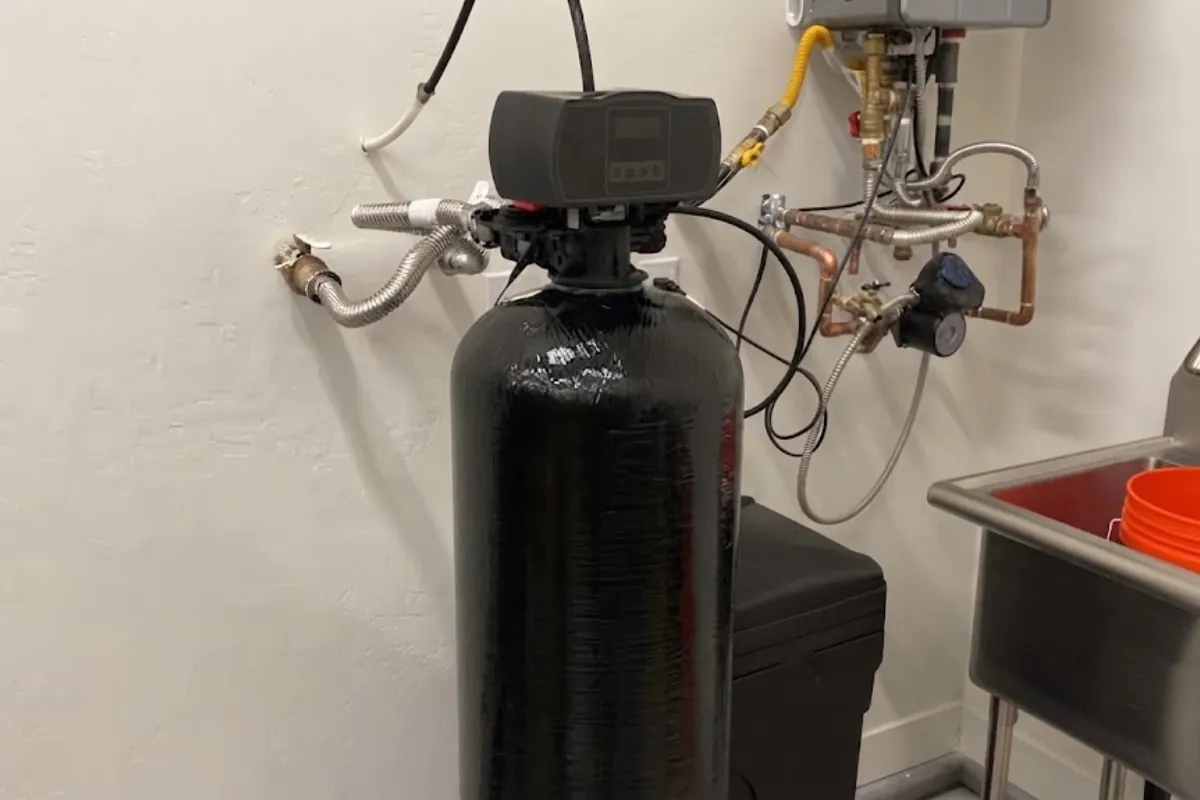
A water softener removes the calcium and magnesium that make water hard, swapping them for sodium or potassium through an ion exchange resin. In hard-water regions, that protects water heaters, fixtures and glassware from scale. In Roswell, the need is usually much smaller.
Public hardness data puts Roswell's tap water at about 1.5 grains per gallon, which counts as soft on the USGS scale. Fulton County water comes from the Chattahoochee River, and the Roswell Water Utility draws mainly from Big Creek. Neither is the kind of mineral-heavy groundwater that makes softeners standard equipment.
So Roswell 24/7 Plumbing's water softener work in 30075 and 30076 is mostly repairing systems already installed, servicing softeners on private wells, and installing new ones where a test shows a real hardness problem. If a test shows your water is already soft, we will tell you not to buy one.
Who Needs One
When a Softener Makes Sense and When It Does Not
A water test decides this, not a sales pitch.
| Situation | Softener useful? | Why |
|---|---|---|
| City or county water, no scale problems | Usually not | Water is already soft |
| Private well with confirmed hardness | Often yes | Groundwater can carry more minerals |
| Existing softener already installed | Maintain or remove | Repair if it works for you, or bypass it |
| Spots or taste you want to fix | Probably not | Filtration, not softening, is usually the answer |
| Tankless heater owners worried about scale | Test first | Soft water already limits scale |
Homes on private wells are more common in the rural parts of nearby Milton than in Roswell itself, and that is where softeners and well-water treatment most often earn their keep.
Softener Leaking or Flooding the Floor?
Put it in bypass, unplug it, and call. A stuck valve can keep sending water to the drain.
What to Do Before Calling About Your Softener
These checks solve a surprising number of softener complaints.
- Check the salt level. The brine tank should have salt above the water line.
- Look for a salt bridge. Push a broom handle down through the salt. A hard crust with empty space below means the salt is not reaching the water.
- Confirm it is not in bypass. The bypass valve behind the control head should be set to service, not bypass.
- Check the clock and settings. A power outage can reset the regeneration schedule.
- Test the water. A test strip tells you whether the treated water is actually soft.
If those all check out and the water still is not soft, the control valve, injector or resin is the next suspect.
Cost
What Affects the Cost of Softener Work
Repairs are usually modest. New systems vary by size and type.
Estimates for new installs are free, and they start with a water test. Softener discharge must go to a drain through an air gap, which is a code point the installer should handle. If the goal is better-tasting water rather than softer water, filtration is usually the better fit.
Softener acting up, or wondering if you need one? Call (770) 214-4545.
Questions
Water Softener Questions
Most Roswell homes on city or county water do not. Public hardness data puts Roswell's water at roughly 1.5 grains per gallon, which is soft. Softeners make the most sense on private wells, in homes with a specific hardness problem confirmed by a test, or where an existing system is already in place and working.
Inexpensive test strips give a quick reading in grains per gallon or parts per million. Your water provider's annual water quality report also lists hardness or the minerals that make it up. For a well, a lab test is worth doing before buying any treatment equipment.
A salt bridge, a hard crust that forms across the brine tank and keeps salt from reaching the water, is the most common cause. Other causes include a stuck control valve, a clogged injector or a system set to bypass. Break up a bridge carefully with a broom handle and see if salt use resumes.
Resin often lasts many years but wears faster on chlorinated water and water with iron. If the system regenerates but the water is not soft, worn resin or a failing valve is likely.
No. A softener only trades hardness minerals for sodium or potassium ions, and it leaves chlorine taste, odors and most contaminants untouched. Those are jobs for filtration, covered on our water filtration page.
During regeneration it flushes brine to a drain. The IPC, which Georgia's code is based on, calls for that discharge to go to the drain through an air gap so wastewater cannot siphon back into the system.
Sources for This Page
Hardness reflects public hardness data for ZIP 30075. Water sources come from the City of Roswell's 2024 water quality report and Fulton County's annual water quality reports. Drain air gap requirements reference the IPC as adapted in Georgia's state minimum plumbing code.
Written by the Roswell 24/7 Plumbing team and checked against the sources above. Last reviewed October 1, 2026.
Softener Question?
Get a straight answer, starting with what is actually in your water.
Call (770) 214-4545