Roswell Plumbing Blog
Backwater Valves for Roswell Homes Near the Chattahoochee and Big Creek
How backwater valves keep sewage out of Roswell basements, when the code requires them, and what the September 2009 flood showed about local risk.
The Risk
When the Sewer Flows Backward
Most sewer backups start inside the house, with a clog in your own lateral. A second kind starts in the public system. When a sewer main is overwhelmed or blocked, wastewater can push back up the lateral and come out of the lowest drain in the house. In Roswell, that lowest drain is often a basement floor drain or a lower-level shower in a walkout basement on a sloped lot.
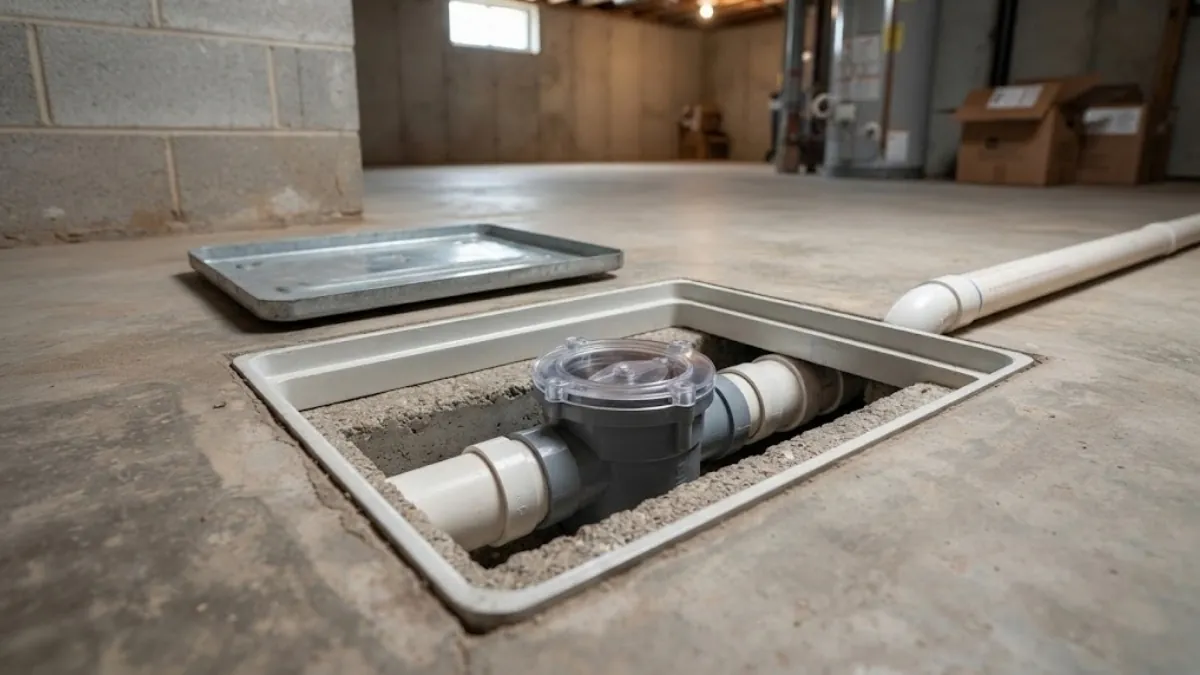
A backwater valve is a one-way valve installed on the building drain or lateral that lets wastewater out and closes when flow reverses. It is inexpensive compared with the damage a sewage backup can do to a finished lower level.
Roswell, the Chattahoochee and Big Creek
Roswell's southern edge runs along the Chattahoochee, and Big Creek, also called Vickery Creek near the old mill, cuts through the city. In September 2009, after days of extreme rain, the USGS measured a 100-year flood on the Chattahoochee at Roswell. Big Creek at Roswell crested above 15 feet on September 22, and the USGS photographed an overflowing sewer and a flooded house on Riverside Road. For a Roswell home with a lower-level bathroom near those creeks, that is exactly the scenario a backwater valve exists to handle.
Events like that are rare, but heavy rain does not need to be historic to strain a sewer system. Groundwater and stormwater can leak into older sewer pipes through cracks and joints, raising flow in the mains during storms. Homes with fixtures below the street are the ones exposed when that happens.
Is It You?
Does Your House Need a Backwater Valve?
A quick way to judge your risk before asking a plumber.
| Your situation | Risk of sewer backflow | What to consider |
|---|---|---|
| Basement or lower-level bathroom below the street | Higher | Backwater valve, often required by code for those fixtures |
| Walkout basement on a lot sloping away from the street | Moderate | Depends on fixture height relative to the sewer |
| All fixtures well above street level | Low | Usually not needed |
| Past backup during heavy rain | Higher | Camera the lateral and consider a valve |
The IPC, which Georgia's plumbing code is based on, requires fixtures whose flood level rims sit below the elevation of the next upstream manhole cover to be protected by a backwater valve. Fixtures above that elevation should not discharge through it.
What to Do Before Installing One
Details that make a backwater valve work instead of causing problems.
- Camera the lateral first. A valve on a failing pipe does not fix the pipe.
- Confirm fixture elevations. Only fixtures below the upstream manhole need protection.
- Plan access. The valve needs a cleanout-style access for inspection and cleaning.
- Get a permit. The City of Roswell requires permits for altering plumbing systems.
- Know how it behaves. When the valve is closed during a backflow, water use in the house should stop.
Pair the valve with a working sump pump if your basement also takes on groundwater.
Related Work
Backwater Valves, Sump Pumps and Drain Cleaning
A backwater valve handles sewage. A sump pump handles groundwater collecting under and around the basement. Many Roswell basements need both, and they are not interchangeable.
If backups happen even in dry weather, the problem is more likely a clog or damaged section in your own lateral, and main line drain cleaning followed by a camera inspection is the first step.
Homes across the river in East Cobb, near Sope Creek and the Chattahoochee, face similar questions, though their sewer mains belong to Cobb County.
How It Works
Inside a Backwater Valve
A residential backwater valve is a normally open flap or gate set in the building drain or lateral. Wastewater leaving the house pushes it open and flows past. When water tries to flow back toward the house, the flap swings closed against its seat and blocks the pipe. Many models are full-port, meaning they do not narrow the pipe when open, which helps prevent clogs.
Placement matters. The valve should protect only the fixtures that sit below the upstream manhole, so upper floors can keep draining normally past it. In practice that often means installing it on the branch that serves a lower-level bathroom or basement, or on the building drain with upper-floor fixtures routed around it. Getting that layout right is the difference between protection and a new problem.
Installation usually means opening a section of basement floor or excavating outside the foundation to reach the line, setting the valve with an access box so it can be inspected and cleaned, then restoring the floor or yard. Some models can be fitted with an alarm that sounds when the valve closes, which tells you to stop using water until the backflow passes.
Telling Them Apart
Sewer Backflow or Your Own Clog?
If sewage comes up a floor drain during a heavy storm while neighbors report the same thing, backflow from the public main is likely, and the County should be told. If it happens in dry weather, only at your house, the cause is almost always a clog or defect in your own lateral. That second case needs cleaning and a camera, not a backwater valve. A valve on a clogged lateral would simply trap your own waste in the house.
Upkeep
Keeping a Backwater Valve Working
A backwater valve only protects the house if its flap can close. Grease, paper and debris can hold it open, so the valve needs an access box and an occasional look, often once or twice a year and after any backup. Open the cover, check that the flap moves freely and seats cleanly, and clear anything caught on it.
Keep the area around the access box clear so it can be reached quickly during a storm. If the valve closes during a heavy rain, stop using water in the house until the main drains, because anything sent down the drains while it is closed has nowhere to go. The valve is one layer of protection. A clear lateral, which our drain cleaning page covers, is the other.
Cost
What Affects the Cost of Adding a Backwater Valve
Most of the cost is getting to the building drain, not the valve itself.
Some insurers ask about backflow protection when adding a water backup endorsement, so keep the invoice. A backwater valve needs occasional cleaning and inspection to stay reliable. Do not install one that blocks your own fixtures upstream from draining, which is why placement and venting should be planned by a licensed plumber.
Want to know if your house needs one? Call (770) 214-4545.
Questions
Backwater Valve Questions
No. The IPC requires them when fixtures sit below the rim of the next upstream sewer manhole, which is most likely in lower-level bathrooms and basements on low lots. Homes where all fixtures sit well above the street sewer usually do not need one.
It stops sewage from backing up through your drains. It does not stop groundwater or surface water from entering through walls or floors. That is a job for grading, gutters and a sump pump.
Check it at least once or twice a year and after any backup. Debris can keep the flap from sealing. Many valves have an access cover for inspection and cleaning.
Sources for This Page
September 2009 flood data and Riverside Road photographs come from the USGS South Atlantic Water Science Center. The backwater valve requirement references the IPC as adapted in Georgia's state minimum plumbing code. Permit requirements come from the City of Roswell Community Development building FAQ.
Written by the Roswell 24/7 Plumbing team and checked against the sources above. Last reviewed October 1, 2026.
Sewage Coming Up a Basement Drain?
Stop water use and call. Backups are handled 24/7.
Call (770) 214-4545