Roswell Plumbing Blog
Hydro Jetting or Snaking for a Root-Choked Roswell Sewer Lateral
How snaking and hydro jetting compare on root-choked laterals under Roswell's mature trees, why the camera comes first, and how to end the cycle.
The Problem
Roots Are Back in the Sewer Line, Again
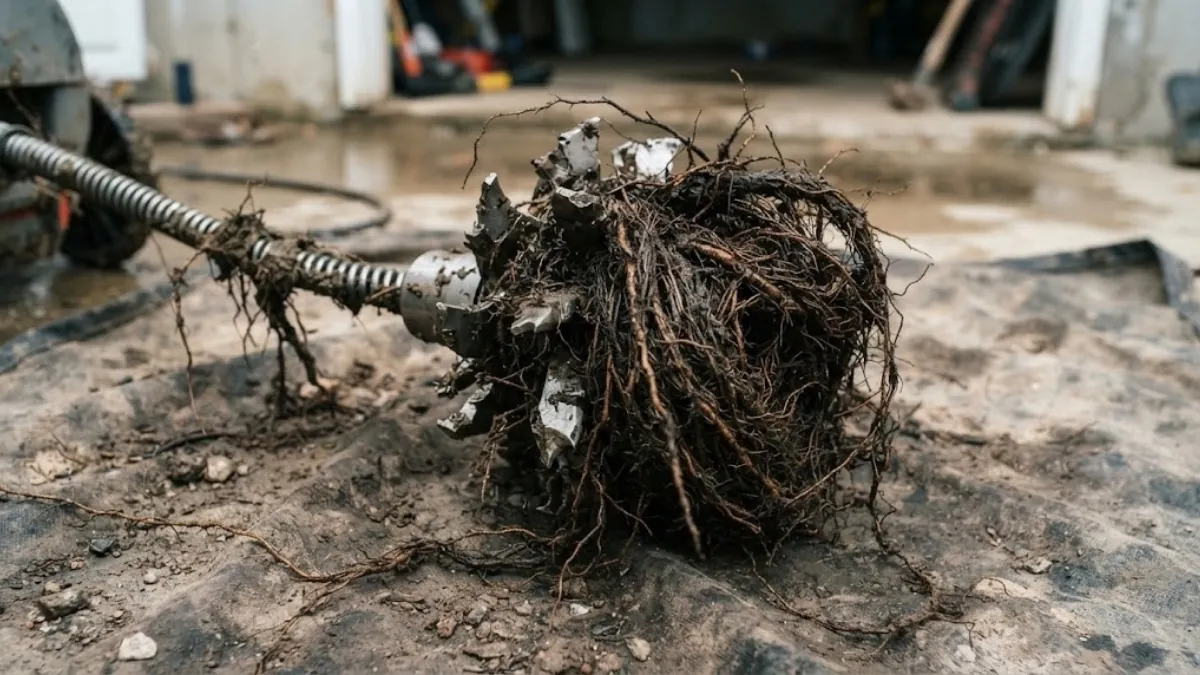
If you own an older house in Roswell under mature trees, there is a good chance you have met this problem: the main line backs up, a plumber cables it, the cable comes back wrapped in fine roots, and a year later it happens again. The question that follows is whether a different cleaning method would last longer.
The two main options are a cable machine, often called snaking, and hydro jetting. Both remove roots. They differ in how completely they clean the pipe, how they treat fragile pipe, and what they cost. Neither one closes the joints where the roots get in.
Compare
Snaking and Jetting for Root Clogs
How the two methods compare on a root-choked lateral.
| Factor | Cable machine (snaking) | Hydro jetting |
|---|---|---|
| How it works | Rotating cable with a cutting head | High-pressure water through rear-facing nozzles |
| Clears the blockage | Yes, cuts a path through the roots | Yes, cuts and flushes roots out |
| Cleans the full pipe wall | Partly | Much more completely |
| Safe on fragile pipe | Gentler, with the right head | Risky on cracked or broken pipe |
| Price of a visit | Usually the cheaper option | Usually the pricier option |
| Time until the next clog | Often months, since fragments stay behind | Often longer, though roots still grow back |
Why the Camera Comes First
Before choosing a method, look inside the pipe. A camera run shows whether the roots are entering at one joint or many, whether any section is cracked or collapsed, and what the pipe is made of. Those answers decide everything.
If the pipe is intact, hydro jetting usually gives a cleaner, longer-lasting result. If the camera shows broken sections, aggressive jetting can make things worse, and a gentler cable clearing buys time while a repair is planned. And if the camera shows roots at most of the joints, cleaning of either kind becomes maintenance on a pipe that needs sealing.
For a first clog in a line that has never given trouble, standard drain cleaning with a cable is often all that is needed, followed by a camera look if it comes back.
Long Term
Breaking the Root Cycle
Roots grow into sewer pipes because the joints are open and the pipe carries water and nutrients. Cleaning removes the roots but leaves the openings. That is why the cycle repeats.
The permanent options are a spot repair at a single bad joint, a cured-in-place liner that seals every joint along the run, or replacement of the lateral. On tree-heavy Roswell lots, lining is often preferred because it avoids trenching through the root zone of the same trees that caused the problem.
Until then, a regular maintenance schedule, timed before the spring and summer growing season, keeps backups from happening at the worst moment.
What to Do Before Choosing a Method
Ask these questions on your next root clog.
- How old is the line and what is it made of? Clay, cast iron, Orangeburg or PVC changes the approach.
- Has it been cameraed? If not, ask for a camera run after clearing.
- How many joints have roots? One or two points to spot repair. Many point to lining.
- Is any section broken or sagging? That limits jetting and lining both.
- What does each option cost over three years? Repeated cleaning adds up, and a permanent fix may cost less over time.
Split-level and ranch homes from the 1960s and 1970s in nearby Dunwoody face the same root cycle under their own mature trees.
Over Three Years
Comparing the Long-Run Options
How the choices usually play out on a root-prone lateral that stays in service.
| Approach | What happens over time | Best for |
|---|---|---|
| Cable clearing only when it clogs | Backups recur, often at inconvenient times | Lines with light, occasional roots |
| Scheduled jetting before the growing season | Fewer surprise backups, recurring maintenance cost | Sound pipe with moderate root entry |
| Spot repair at one or two joints | Roots stop at those joints, others may still open | Isolated root entry points |
| Full-length lining | Joints sealed along the lined run | Round pipe with roots at many joints |
| Lateral replacement | New pipe, roots start from scratch | Broken, sagging or collapsed lines |
The cheapest option in the first year is rarely the cheapest over several years. Adding up the expected number of cleanings against the price of a permanent fix makes the decision clearer.
Timing
When to Schedule Maintenance Cleaning
Roots grow actively through the warm months. Scheduling a cleaning in late winter, before spring growth takes off, clears the line when root mass is lower and gets ahead of the season when backups tend to cluster. A camera run at the same visit shows whether the root entry points are getting worse from year to year.
Keep the footage from each visit. Comparing them over time is the most honest way to decide when maintenance has stopped making sense and a permanent fix is due.
Maintenance
How Often a Root-Prone Lateral Needs Attention
There is no fixed schedule, because root growth depends on the tree, the season and how open the joints are. A useful rule is to track the interval between backups. If a line needs clearing every year or less, that pattern is telling you the joints are open and the roots will keep returning.
At that point the comparison is no longer cable versus jet. It is repeated cleaning versus sealing the pipe. Paying for clearing every twelve months adds up, and each backup risks water damage in a lower-level bathroom. A camera run after the next cleaning, with footage marked by distance, gives you the facts to compare the ongoing cost of cleaning against a one-time liner or repair.
Questions
Root Clog Questions
Chemical root treatments can slow regrowth for a while, but they do not remove roots already in the pipe or seal the joints where roots enter. Follow the label and local rules if you use them, and treat them as maintenance, not a fix.
It varies with the tree, the season and the size of the openings. In older laterals under large trees, regrowth within one to two years is common. A camera inspection after cleaning shows how many joints are open.
It can if the pipe is already cracked or broken. That is why a camera look comes first on older lines. Sound clay pipe tolerates jetting at the right pressure.
Sources for This Page
Root intrusion patterns in older Roswell laterals come from published service-area notes by local plumbing contractors. Cleaning method comparisons reflect standard drain cleaning equipment practice.
Written by the Roswell 24/7 Plumbing team and checked against the sources above. Last reviewed October 1, 2026.
Roots Backing Up the Line Again?
Get it cleared and cameraed, then decide on a permanent fix.
Call (770) 214-4545