Roswell Plumbing Blog
PEX vs. Copper for Roswell Water: Choosing Pipe for a Repipe
How PEX and copper compare for a Roswell repipe, given soft water, Fulton County's corrosion control, freeze risk and the kind of house you have.
The Question
Choosing Pipe for a Roswell Repipe
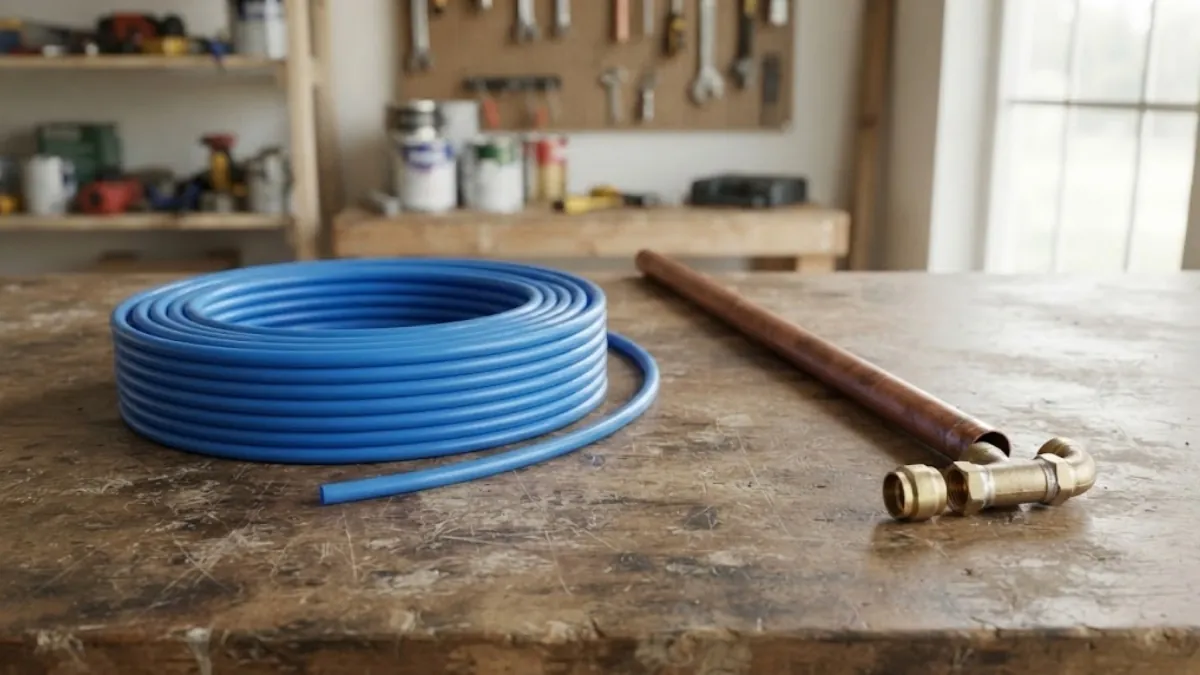
Once a Roswell homeowner decides to replace polybutylene or corroded galvanized pipe, the next question is what to replace it with. For most houses the choice comes down to PEX or copper. Both are proven, both are accepted by Georgia's plumbing code, and both are used every day across North Fulton.
The right answer depends less on which material is better in general and more on your house, your budget and your water. This article looks at how Roswell's water, climate and housing stock affect the choice.
What Roswell's Water Means for Pipe
Roswell's tap water is soft, around 1.5 grains per gallon in public hardness data, so heavy mineral scale is not the problem it is in hard-water regions. That removes one of the classic arguments against copper in some cities.
Fulton County, which supplies most of Roswell, notes in its water quality reports that it adds lime and orthophosphate at the treatment plant to protect pipes from corrosion, and disinfects with chlorine. Corrosion control is aimed at keeping metals in household plumbing from leaching and at extending pipe life. The Roswell Water Utility, which serves the rest of the city, publishes its own annual report worth reading if you are on city water.
Chlorine is relevant to both materials over the long run. PEX products carry chlorine resistance ratings, and copper can develop pitting under some water conditions. Neither is a reason to rule out the other. They are reasons to buy listed, rated products and install them well.
Compare
PEX and Copper Side by Side
How the two compare for a typical Roswell repipe.
| Factor | PEX | Copper |
|---|---|---|
| Installed cost | Usually lower | Usually higher |
| Fittings inside walls | Fewer, long continuous runs | More joints |
| Wall openings needed | Fewer, tubing can be fished | More, rigid pipe needs access |
| Freeze tolerance | Better, though not immune | Lower, splits when frozen |
| Sunlight exposure | Must be protected from UV | Not affected |
| Service life | Long, when installed per instructions | Long, often many decades |
Many repipes use both: copper at the water heater and exposed runs, PEX through the walls. That mix is common and sensible.
Your House
How Your House Changes the Answer
Foundation type matters. Roswell has many homes over crawl spaces or basements on sloped lots, where long runs can go underneath and either material works. In slab homes, PEX is often favored because it can be routed through walls and attics with fewer openings.
House age matters too. In older homes near the historic district, walls are plaster and lath, and minimizing openings is worth a lot, which again leans toward PEX. In newer houses with open basements, copper's extra labor matters less.
Budget is the last piece. A whole-house repipe quote should list material, number of openings and whether drywall repair is included, so you can compare apples to apples. If the service line in the yard is also old, pricing a water line replacement at the same time can save a second project.
What to Do Before Picking a Material
Five questions to ask any plumber quoting a repipe.
- Which PEX type and fittings? Crimp, clamp or expansion, and why.
- What certifications? Look for NSF/ANSI 61 on tubing and fittings.
- How many wall openings? And who patches them.
- What happens at the water heater? Transition, clearance and any expansion tank.
- Permit and inspection? The City of Roswell requires a permit for altering or replacing plumbing.
Houses with mixed piping from different decades, common in nearby Dunwoody, benefit most from a full plan rather than a patchwork.
Transitions
Mixing Materials the Right Way
Few repipes are purely one material. Copper often stays at the water heater, PEX runs through the walls, and older galvanized or polybutylene may remain on a section that is not being replaced yet. Every joint between different materials needs the right transition fitting. Copper to galvanized, for example, calls for a dielectric connection to limit galvanic corrosion, and polybutylene needs fittings made specifically for it.
Ask where transitions will be and what fittings will be used. Transitions are a common failure point when the wrong part is used, and they are easy to get right when planned.
Inspection
What the City Inspector Looks At
Whichever material you choose, the City of Roswell inspection focuses on the same basics: pipe that is listed for potable water, proper support and spacing, protection where pipe passes through framing, correct sizing, and a pressure test with no leaks before walls are closed. PEX must also be protected from sunlight and installed according to the manufacturer's instructions, which the inspector may ask to see.
A repipe that passes inspection comes with a record you can hand to a future buyer or an insurer, which is worth more than any sales claim about the material itself.
Water Chemistry
What Fulton County Adds to Protect Pipes
Fulton County's water quality reporting describes the final treatment step at its plant: fluoride is added, and lime and orthophosphate are fed to protect pipes from corrosion. Orthophosphate forms a thin protective layer on the inside of metal pipe, which is part of how utilities limit corrosion in copper and older lead-soldered plumbing.
That treatment helps metal pipe, but it does not make old copper new. A copper system that has already developed pinhole leaks may keep producing them, and repeated leaks in the same house usually point to a repipe rather than more spot repairs. PEX is unaffected by that chemistry either way, which is one reason it is common in full repipes.
Questions
PEX and Copper Questions
PEX used for potable water in the United States is certified to NSF/ANSI 61 for drinking water contact. Ask for tubing and fittings with that listing, which reputable brands print on the pipe.
PEX can expand somewhat when water inside freezes, which gives it more tolerance than rigid copper. It is not freeze-proof, and fittings can still fail, so pipes in crawl spaces and exterior walls still need insulation.
Manufacturers set clearance rules near water heaters, particularly gas units, and many installers use a short copper or listed connector at the heater before transitioning to PEX. Follow the tubing manufacturer's instructions and the inspector's requirements.
Sources for This Page
Water hardness reflects public hardness data for ZIP 30075. Corrosion control and disinfection details come from Fulton County's annual water quality reports. Permit requirements come from the City of Roswell Community Development building FAQ. Drinking water certification references NSF/ANSI 61.
Written by the Roswell 24/7 Plumbing team and checked against the sources above. Last reviewed October 1, 2026.
Deciding on a Repipe?
Get a free estimate with both material options priced side by side.
Call (770) 214-4545