Roswell Plumbing Blog
Sizing a Sump Pump for a Roswell Basement on a Sloped Lot
How to size a sump pump for a Roswell basement: measure the inflow, account for lift height, add a backup and route the discharge downhill.
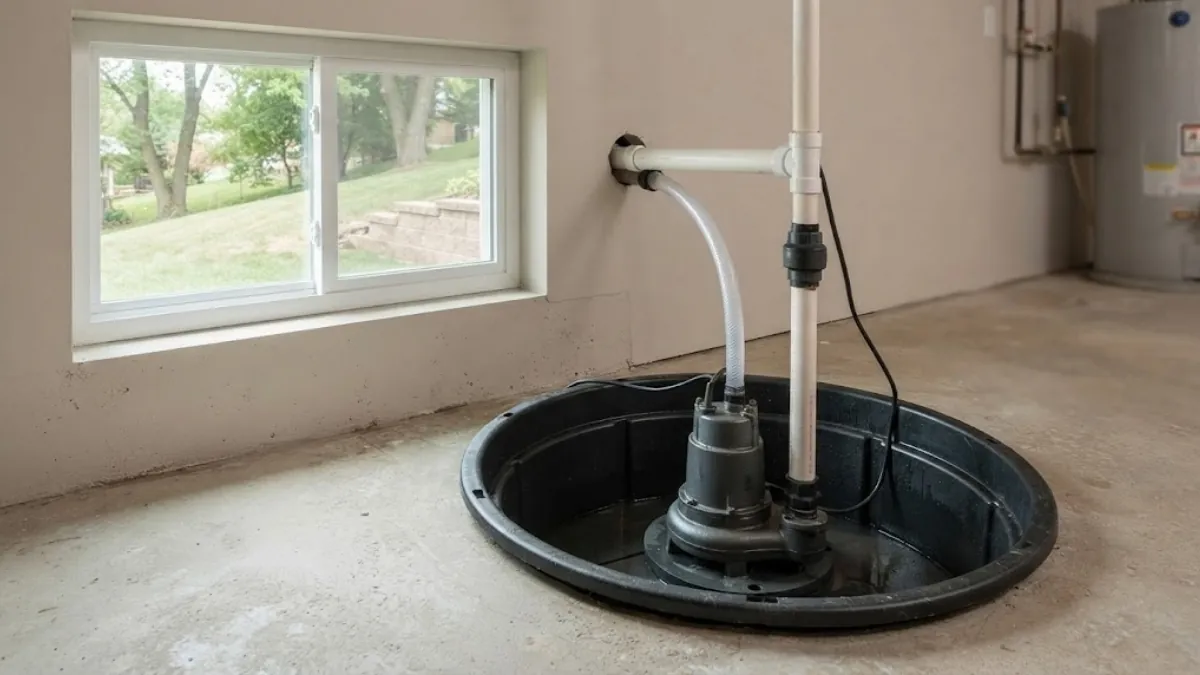
The Setting
Basements, Slopes and Red Clay
Roswell's hills are why so many homes have walkout or partial basements, and they are also why so many of those basements have sump pumps. Water moving downhill through saturated clay reaches the uphill foundation wall first and collects under the slab. The pump's job is to move that water out faster than it arrives.
Heavy rain tests that. In September 2009, the USGS recorded a 100-year flood on the Chattahoochee at Roswell, and Big Creek at Roswell crested above 15 feet on September 22. Most storms are nowhere near that, but a pump sized for a light rain can fall behind in an ordinary summer downpour.
Sizing a sump pump is not guesswork. It comes down to two numbers: how fast water enters the pit and how high the pump has to lift it.
What to Do Before Buying a Pump: Measure the Inflow
A simple bucket-and-stopwatch test during or right after heavy rain.
- Let the pump run and shut off. Start with the pit at its low point.
- Time the fill. Measure how many seconds it takes the water to rise a set distance, such as one inch.
- Measure the pit. Its diameter tells you roughly how many gallons that inch represents.
- Convert to gallons per minute. Gallons per inch multiplied by inches per minute gives the inflow.
- Add margin. Size the pump to handle more than the heaviest inflow you have measured.
If you cannot measure during a storm, a plumber can estimate from the pit size, the number of drain lines feeding it and past behavior.
Lift Height
Why Lift Height Matters
A pump's flow drops as the vertical lift increases. Manufacturers publish this as a pump curve.
| What affects lift | Why it matters | What to check |
|---|---|---|
| Vertical distance from pit to discharge exit | More lift means less flow from the same pump | Measure from pit bottom to where the pipe leaves the house |
| Length of the discharge line | Long runs add friction | Count total feet of pipe |
| Elbows and fittings | Each fitting adds resistance | Keep turns to a minimum |
| Check valve | Adds a little resistance but prevents backflow into the pit | Install and keep it working |
Compare your inflow and lift against the manufacturer's pump curve, not just the horsepower rating on the box. Two pumps with the same horsepower can move very different amounts of water at the same lift.
Backup Power Is Part of the Sizing
The heaviest rain often comes with thunderstorms, and thunderstorms knock out power. A primary pump sized perfectly for inflow does nothing in an outage. A battery backup pump, installed beside the primary with its own switch, takes over when power fails or the main pump quits. Its capacity should be judged the same way, against inflow and lift.
A high-water alarm is the cheapest part of the system and one of the most useful. It warns you before water reaches the floor. Our sump pump installation and repair page covers pump types, backups and alarms.
When It Fails Anyway
If Water Reaches the Floor
Even well-sized systems can be overwhelmed, or fail when a float jams. If water gets onto a finished floor, stop what you can, move valuables, photograph everything and call. The plumbing side is getting the pump running again. Drying carpet, drywall and framing is a separate service, explained on our water damage restoration page.
Homes on the rolling terrain of nearby Milton face the same slope-and-clay challenge, often with longer discharge runs across larger lots.
Georgia's plumbing code, adapted from the IPC, prohibits draining storm water into sewers intended only for sewage, so the discharge belongs outside, directed away from the house.
Components
Float Switches, Check Valves and Maintenance
Most pump failures are not the motor. They are the switch. Tethered floats swing up and down in the pit and can catch on the pit wall or the pump itself. Vertical floats need less room and suit narrow pits. Electronic switches have no moving float at all. Choose the type that fits your pit and keep debris out of its way.
The check valve on the discharge line keeps water already pumped from falling back into the pit when the pump stops. A failed check valve makes the pump cycle constantly. Listen for a heavy thump when the pump shuts off, which often points to a valve problem, and replace it when it leaks back.
Test the whole system before storm season by pouring water into the pit, check that the discharge outlet is clear, and replace backup batteries on the schedule the manufacturer recommends.
Through the Year
A Simple Sump Pump Testing Schedule
A pump sized correctly on day one can still fail if nobody checks it, so sizing and maintenance belong together.
Test the pump before the stormiest months and again after any long dry stretch, because float switches stick when they sit unused. Pour water into the pit until the float lifts, confirm the pump empties it and shuts off, then walk outside and watch the discharge.
Check the battery on any backup pump at the same time, since batteries lose capacity with age. Listen for a check valve that lets water rush back into the pit after the pump stops, which makes the pump cycle more than it should. A pump that is noticeably louder or slower than last year is giving you warning. Replacing it on your schedule is far better than replacing it during a storm, which is when our sump pump repair calls spike.
Questions
Sump Pump Sizing Questions
No. An oversized pump empties the pit very quickly and cycles on and off often, which wears the switch and motor. The goal is enough capacity for the peak inflow at your actual lift height, with some margin.
Most residential pumps use 1-1/2 inch discharge pipe, and some larger pumps use 2 inch. Follow the pump manufacturer's recommendation, since undersizing the pipe reduces flow.
Downhill and away from the foundation, to daylight or an approved drainage point. On sloped Roswell lots, water released uphill of the house tends to run straight back to the pit. It should not go into the sanitary sewer.
Sources for This Page
September 2009 flood data for the Chattahoochee River and Big Creek at Roswell come from the USGS South Atlantic Water Science Center. The storm water rule references the IPC as adapted in Georgia's state minimum plumbing code. Pump curve guidance reflects standard manufacturer data.
Written by the Roswell 24/7 Plumbing team and checked against the sources above. Last reviewed October 1, 2026.
Pump Falling Behind in Storms?
Get it sized to your actual inflow and lift, with a backup that works in an outage.
Call (770) 214-4545