Free Estimates on Installs
Shower & Bathtub Installation in Roswell, GA
New shower valves, tub replacements, tub-to-shower conversions and the rough-in plumbing behind a bathroom remodel, permitted and inspected in Roswell.
- Free estimates
- Code-required valves
- Permit handled when needed
Before You Remodel
Decide on fixtures before the walls close.
Shower & Bathtub Installation
The Plumbing Behind a Bathroom Remodel
Shower and bathtub installation covers new tubs, shower valves and trim, tub-to-shower conversions, shower pans and drains, and the rough-in plumbing that sits behind the tile. Roswell 24/7 Plumbing installs and replaces showers and tubs across Roswell in 30075 and 30076, working either directly for the homeowner or alongside a remodeling contractor.
The plumbing is the part of a bathroom remodel that is hardest to change later. Once the tile is up, moving a valve two inches or fixing a drain that was pitched wrong means tearing it back out. Getting the rough-in right, and inspected, before the walls close is the whole game.
In Roswell, that inspection is not optional. The City of Roswell requires a permit before anyone alters or replaces a plumbing system, and bathroom remodels that move or replace valves and drains fall squarely under that rule.
Common Projects
What Roswell Homeowners Usually Ask For
Valve replacement
Swapping an old two-handle valve for a single-handle pressure-balance or thermostatic valve.
Tub-to-shower conversion
Taking out a tub to make room for a walk-in shower, which moves the drain and raises the valve.
Tub replacement
Replacing a worn or chipped tub, including cast iron removal in older homes.
Rough-in for a remodel
Setting valves, drains and supply lines for a contractor's tile and glass work.
Older houses near the historic district and in the 1970s and 1980s subdivisions often still have their original tubs and two-handle valves. Replacing the valve is the right moment to replace the supply lines behind it as well, especially if the house has polybutylene supply pipe.
Shower Valve Leaking Inside the Wall?
That one should not wait. Shut the water off and call to get it opened and fixed.
Code Points That Decide the Design
A few rules shape almost every shower and tub project. The IPC, which Georgia's state minimum plumbing code is based on, requires shower and tub-shower valves to be pressure-balance, thermostatic or combination types, so a flushing toilet down the hall cannot turn the shower scalding or ice cold.
Georgia's high-efficiency fixture rules, which followed the Water Stewardship Act of 2010, cap showerheads at 2.5 gallons per minute at 60 psi. Multi-head or body-spray showers have to be designed with that in mind, and the water heater has to be sized for everything running at once, which sometimes means a larger water heater as part of the project.
Drain sizing and trap placement matter most in conversions. A tub drain and a shower drain are often different sizes, and a shower pan has to slope evenly to the drain with proper waterproofing underneath. These are exactly the things the City's rough-in inspection checks.
Project Flow
How a Shower or Tub Project Runs
- 1
Plan and permit
Pick fixtures, set valve and drain locations, file the permit.
- 2
Demo and rough-in
Old fixtures out, new drain, supply and valve set.
- 3
Inspect
City rough-in inspection before walls are closed.
- 4
Trim and test
After tile, install trim, test flow and temperature.
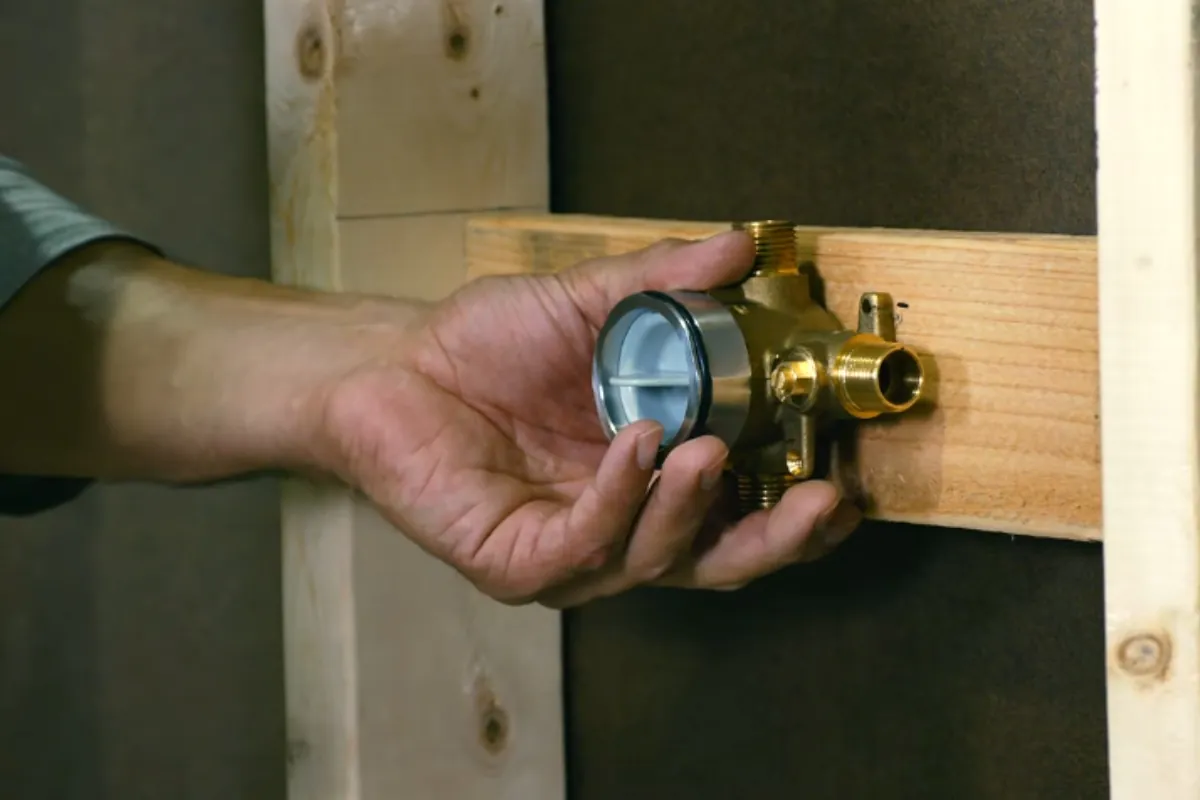
Buying fixtures before the rough-in is important. Valve bodies are brand specific, and the trim you want has to match the valve behind the wall. Nearby homes in Sandy Springs built in the 1960s and 1970s follow the same process, often with an older cast iron tub to remove first.
Cost
What Drives the Cost of Shower and Tub Work
Moving plumbing is where the cost climbs.
Estimates for installs and conversions are free. Tile, glass and waterproofing are often handled by a remodeling contractor, and the plumbing scope should be clearly split out in either quote.
Planning a bathroom project? Call (770) 214-4545.
Questions
Shower and Tub Questions
If the work changes or replaces plumbing, such as moving a drain or replacing the valve, a City of Roswell permit is required. A like-for-like surface swap that leaves the plumbing untouched may not. The quote will say which applies.
It is a valve that keeps the shower from scalding or going cold when someone flushes a toilet or runs a tap elsewhere. The IPC, which Georgia's code is based on, requires shower and tub-shower valves to be pressure-balance, thermostatic or a combination type, so any new valve will be one.
Yes. Georgia's high-efficiency fixture rules limit showerheads to no more than an average of 2.5 gallons per minute at 60 psi. Many current showerheads use less and still perform well.
Yes. The drain usually has to move and the trap size changes, the valve height changes, and the floor needs a properly sloped pan and waterproofing. It is a remodel-level job and needs a permit.
A worn cartridge is the usual cause. Many can be replaced without opening the wall. If the valve is old enough that parts are unavailable, replacing the valve body means access from the back or through the tile.
Yes. Freestanding tubs need a floor-mounted or wall-mounted filler and a drain placed exactly where the tub will sit, so the location is decided before the floor is finished. Cast iron tubs also need the floor checked for weight.
Sources for This Page
Permit requirements come from the City of Roswell Community Development building FAQ. Showerhead flow limits come from Georgia Code section 8-2-3 and UGA Cooperative Extension's summary of the Georgia Water Stewardship Act. Valve requirements reference the IPC as adapted in Georgia's state minimum plumbing code.
Written by the Roswell 24/7 Plumbing team and checked against the sources above. Last reviewed October 1, 2026.
Planning a New Shower or Tub?
Get the rough-in right before the tile goes up. Free estimates on installs.
Call (770) 214-4545