Leaks Under Concrete Floors
Slab Leak Detection & Repair in Roswell, GA
Warm spots, running-water sounds and a meter that never stops can all point to a supply leak under your slab. We pinpoint it, then fix it in place or reroute the line.
- Pinpointed before any concrete is cut
- Spot repair or reroute options
- Free estimates on reroutes
Slab Leak Warning Signs
Two or more of these together justify a test.
Sound Familiar?
A Warm Spot on the Floor, or Water You Can Hear but Not See
People with slab leaks rarely search for the term at first. They search for what they notice: a patch of tile that feels warm in one spot, the hiss of water somewhere under the kitchen when everything is off, a water bill that doubled, or carpet that is damp along one wall for no reason.
Slab leak detection and repair means finding a supply leak in the pipe running under or inside a concrete foundation, then fixing it by opening the floor at that exact point or by rerouting the line so the buried section is no longer used. Roswell 24/7 Plumbing handles both across Roswell in 30075 and 30076.
The detection comes first, and it has to be precise. Concrete is expensive to cut and patch, so the goal is one small, correct opening or none at all.
Where Slab Leaks Happen in Roswell
Roswell is not a classic slab-leak city. Its sloped lots mean many houses sit on crawl spaces or full and partial basements, where pipes are exposed and leaks are easier to reach. Slabs show up in single-level ranch homes, in many townhome communities along the Holcomb Bridge Road corridor, in newer construction and in the lowest level of basement homes.
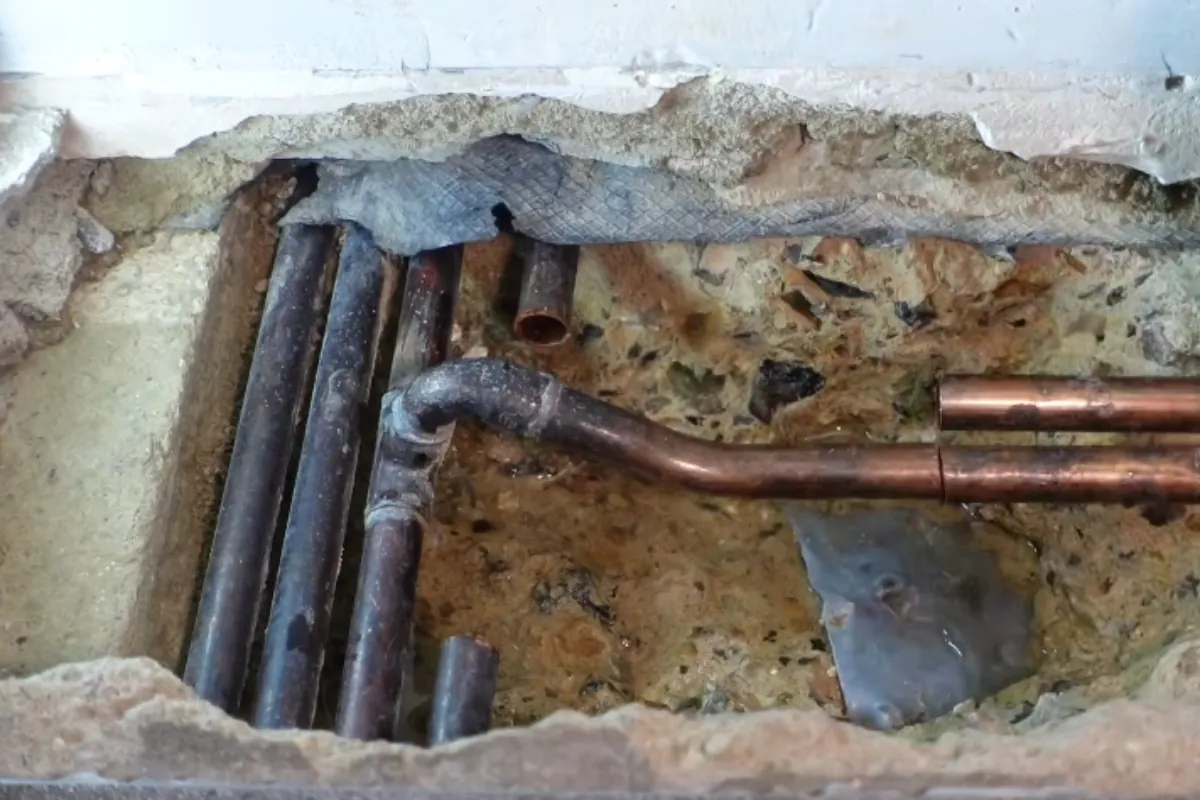
When a slab does leak, hot-water lines are the usual culprit because heating and cooling cycles make the pipe expand and contract against the concrete. Copper under slabs can develop pinholes over time, and red clay soil that shrinks and swells with moisture adds stress where pipes pass through the concrete.
If you are not sure whether your leak is under the slab or in a wall above it, general leak detection answers that first.
Hear Water Under the Floor?
If water is not pooling anywhere, you can leave it on until the test, which helps the equipment hear the leak.
Repair Options
Spot Repair, Reroute or Repipe?
The right fix depends on the pipe's history and where it runs.
| Option | What it involves | Best when | Trade-off |
|---|---|---|---|
| Spot repair | Open the slab over the leak, replace the damaged section, patch the floor. | A single leak in otherwise sound pipe. | Floor patching, and other old sections remain. |
| Reroute | Run a new line through walls or the attic and abandon the buried section. | Pipe has leaked before or runs under finished flooring. | Some wall and ceiling access. |
| Whole-home repipe | Replace the supply system throughout the house. | Multiple failures or failure-prone pipe material. | Largest project, longest lasting. |
When the supply system is polybutylene or otherwise failing throughout, a whole-home repipe ends up cheaper than paying for leak after leak.
Detection
How a Slab Leak Is Pinpointed
- 1
Confirm the loss
Meter and pressure tests on hot and cold separately.
- 2
Trace the line
An electronic locator maps the pipe route under the slab.
- 3
Listen and image
Acoustic sensors and thermal imaging find the exact spot.
- 4
Mark and advise
The spot is marked and the repair options priced.
Testing the hot and cold sides separately is the fastest way to cut the search in half. A thermal camera makes a hot-water leak under tile stand out as a warm bloom that follows the pipe route. Slab homes in nearby East Cobb get the same sequence.
What to Do Before the Leak Test
A few steps limit damage and make the leak easier to find.
- Check hot versus cold. Close the cold inlet valve on top of the water heater. If the meter stops moving, the leak is almost certainly on the hot side, and the rest of the house keeps cold water.
- Leave the water on otherwise. Detection equipment listens for water escaping under pressure. A fully shut-off system is harder to test.
- Protect the flooring. Pull up rugs and move furniture off any damp or warm area.
- Photograph and record. Take pictures of damp spots and write down meter readings with times. Insurers and the plumber both use them.
- Do not start cutting. Opening a floor on a guess usually means opening it twice.
If water is actively pooling or rising, close the main and call right away instead.
Cost
What Changes the Cost of a Slab Leak Repair
Most of the cost is access and floor restoration, not pipe.
Many homeowners policies help with the cost of accessing a slab leak and repairing resulting damage but not with the failed pipe. Keep the detection report and photos for the claim. Reroutes are planned work and get a free estimate.
Think you have a leak under the floor? Call (770) 214-4545.
Questions
Slab Leak Questions
The classic signs are a warm spot on a tile or wood floor, the sound of running water with every fixture off, a water meter that moves when nothing is on, damp carpet with no obvious source, and new cracks in flooring. Any two of those together make a slab leak test worth doing.
Fewer than in some Sun Belt cities. A lot of Roswell housing sits on crawl spaces or basements because of the sloped lots. Slab foundations show up more in some townhome communities, ranch homes and newer construction, and in the lowest level of homes with a partial basement.
A single leak in otherwise healthy pipe is often repaired in place. Pipe that has already leaked more than once, or pipe of a type prone to failure, is usually a better candidate for a reroute through walls or the attic, which leaves the old line abandoned under the slab.
Many policies help with the cost of accessing the leak and the resulting water damage, but not the failed pipe itself. Policies differ widely, so call your insurer with the detection report in hand.
A long-running leak can soften the soil under a slab and contribute to settling, especially in clay. That is a good reason not to let one run for months, although most slab leaks are found long before that becomes a structural issue.
A spot repair is often done in a day, plus time to patch the floor. A reroute can take one to two days depending on how far the new line runs and how much wall or ceiling access is needed.
Sources for This Page
Leak detection methods reflect standard acoustic, thermal and electronic line-locating practice. Foundation patterns reflect Roswell's sloped terrain and housing mix as described by local plumbing contractors. Soil behavior reflects Georgia Piedmont clay characteristics.
Written by the Roswell 24/7 Plumbing team and checked against the sources above. Last reviewed October 1, 2026.
Warm Floor or Running Water With Every Tap Off?
Get the leak pinpointed before any concrete is cut.
Call (770) 214-4545